Showing posts with label Dodge. Show all posts

Sunday, February 10, 2013

Name or just a number

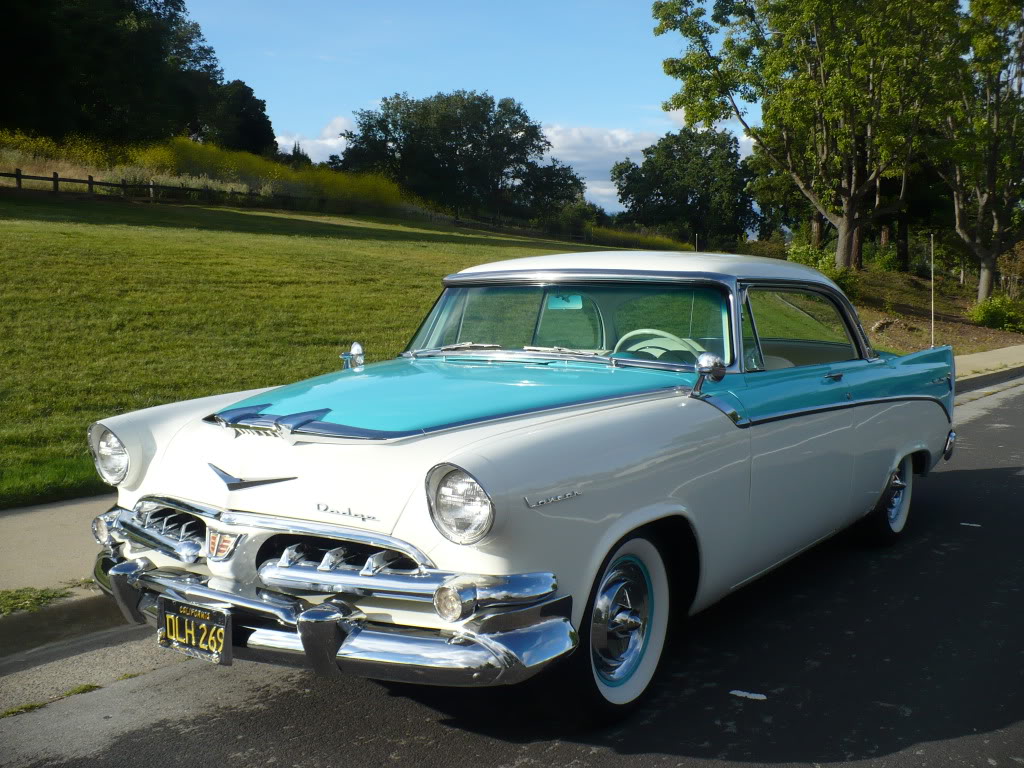
Automakers may have been guilty of stylistic excesses in the 1950s, but Dar still remembers fondly tri-tone paint jobs, 4-door hardtops and fins that soared into the sky.   He also loved the names of 50s vehicles, like the nomenclature affixed to the 1956 Dodge Coronet Custom Royal Lancer, shown here.


Cadillac, as well as Lincoln, recently joined other luxury automakers and name their new models using a combination of capital letters, not a “noun.”  Gone are Cadillac Coupe de Ville and Lincoln Town Car.  Say hello to ELR (new plug-in hybrid by Cadillac, shown) and MKZ (Lincoln’s replacement for the Zephyr.)
-->
 
Here’s a question for the readers of this column.   Given a choice, would you prefer that automakers name their vehicles with letters and numbers (referred to as an alpha-numeric name) or with nomenclature based on a usually common word? 

Do you like the sound of a car being named A8 or Coupe de Ville?  Does 328i ring your bell louder than Mustang Boss?  It appears that car buyers are opting for the alphanumeric lingo.  In the past ten or twenty years, it seems that almost all the automakers – especially those selling luxury vehicles – have abandoned using nouns or names and all have embraced using a blend of letters (mostly capitalized) and numbers (some making sense – like indicating size of engine or length of the car and some signifying nothing).

Credit has to be given to the three major German luxury brands for marketing their vehicles using alphanumeric names over a long period of time and becoming extremely successful.  While A4 Audis, C-class Mercedes-Benzes and 3 series BMWs are selling like hotcakes, I for one, really wish that automakers had stuck with using old fashion names for their vehicles.

I have a couple of reasons for feeling this way about vehicle names. 

This may only be a problem for me, but I have a devil of a time remembering car names that aren’t nouns.  When Cadillac started switching its car model names to all capitalized letters it was fairly easy for me to remember their offering’s new names. 

The Deville Touring Sedan became the DTS, the Seville Touring Sedan became the STS and the Catera became the CTS.  That made some sense to me.  I wasn’t happy that Deville became DTS but at least I could remember the name.

Then Cadillac introduced the SRX crossover and the XLR roadster.  It took me a long time to remember those two new names.   The X used in SRX was a good reference, because most of the new crossovers were probably all-wheel drive and X is often used by automakers to identify that feature.    But what the heck does SR stand for?

And then along came the Corvette-based XLR.  It didn’t have all-wheel drive but still had the X in the name.   I eventually remembered the new names, but they don’t come to me in an instant.

The new names must be working for Cadillac because the GM luxury marque isn’t giving up on using the three cap letters to name their new models.  At the recent Detroit auto show, Cadillac introduced a new model called the ELR.

Can you guess what those letters stand for?  In some ways, the name ELR makes some sense.  The ELR is Cadillac’s version of Chevy’s Volt plug-in hybrid model.  Unlike the 4-door Volt, the ELR is a two-door sporty coupe.  Can we assume that the E stands for electric and the L stands for luxury?  Now if only the ELR was a little convertible, I could than make the argument that the R stands for roadster.

As it now stands, I have no idea what the R stands for and I guess it doesn’t matter, as long as I can remember the new car’s name.

Again it may be my age, but I’m from an era when there were cars built and sold that had really wonderful names.   I recall going to the dealer in Lapeer and sitting in an Eldorado Biarritz convertible or seeing in the catalog the photos of the Cadillac Eldorado Seville and Eldorado Brougham.  Just saying those Cadillac names would make folks feel wealthy and important.

Over at the Dodge dealer you could put you money down for a Dodge Coronet Custom Royal Lancer (the Lancer indicated it was a hardtop.)  My tongue and brain feel better saying Coronet Custom Royal Lancer than saying 750i or Q50? 

I’m really pleased that domestic makers are still coming up with new names that don’t have cap letters and numbers in them.   Chevy moved from Cobalt to Cruze in naming its most recent compact car.  The Bow Tie brand still calls its family sized cars the Impala and Malibu.  They didn’t even think of changing the Corvette’s name when the seventh generation of the iconic sports car was introduced in January.

Dodge likes to use names from the past.   They have the Charger, Challenger and just brought back the Dart name.  That was a good move.  Chrysler uses numbers in calling its full-size sedan the 300 but that makes sense.   The highly regarded 300 letter series performance cars of 1955 to 1965 have defined the brand.

Ford and Chevy has introduced new models in the past with names that start with the letters F and C respectively.   For a period of time back in the sixties, all Chevys had to start with the letter C.  There was the Chevy Corvair, Chevy II, Chevelle and Camaro.

Ford followed suit with the Falcon and Fairlane.  They broke the “F” tradition in 1964 when choosing a name for their pony car.  Instead of Filly, they selected Mustang.  Chevy weaned itself of the C tradition with the Monte Carlo and later the Lumina, Malibu, Monza and other models.

Of late, Ford is back to naming new offerings using the letter “F.”   The Focus and Fusion being current examples.

Perhaps the automakers are drifting into alphanumeric names and away from using nouns because the good ones like Mustang and Impala are already taken.   Of course, if you are Toyota, you can always just come up with interesting sounding names like Camry and Yaris and find buyers galore.  I checked my dictionary and neither of those words are listed.

Are there still good names available for automakers to use?  I think so.  I don’t have time to leaf through the dictionary to find some examples but somewhere in my Funks and Wagnall there must be a winning name that we can all pronounce, spell and relate to. 

We can then look forward to the introduction of a new Chevy Arapahoe pickup and not a Chevy MPUX4 (that stands for massive pick up with four-wheel drive, in case you wonder). 

I’m going to post this article on my blog site (see address at end of column).  I’d like to hear your feedback on my auto names observations.


Friday, February 08, 2013

Dar's and Chuck's top ten beautiful and homely cars

 
I’m writing this column in the south, enjoying 70-degree temps and observing from afar the frigid and snowy weather that engulfed the Midwest just after I departed St. Joseph.

Joining me is my good friend Chuck Hassel, a fellow car nut who grew up in the Chicago area but now resides in South Carolina.  We’ve make our visit south each January to escape the colder northern climes (well, at least I do) and, more importantly, to discuss cars.   We love all kinds of cars, be they new or old.

Chuck has been ogling cars since he was a little kid.   His education includes degrees in engineering from Purdue and product design from Art Center College in California.

I showed Chuck a copy of my last week’s column about the Hemmings Classic Car editorial with Richard Lenitello’s eight ugliest cars and my reaction to his selections.   Naturally we began coming up with ugly candidates of our own.   We agreed up with our top ten list.

We also thought it would be fun to see if we could come up with a list of the ten most beautiful cars.   It was a challenge, but we did it. 

So, behold, our list of the ten homeliest (ugly seems too cruel a word) and ten most beautiful American cars ever offered.  After each vehicle selected we have added a brief remark on why it was selected:

TEN HOMELIEST VEHICLES:
            1937 - ‘39 Willys (bug-eyed headlights and a pointed snout)
1958 Buick (massive looking, a ponderous chrome-mobile)
1958 Ford (a failed attempt to duplicate the look of the new 4-place T-bird)
            1958 Oldsmobile (see 1958 Buick above)
            1958 Packard (stacked fins and tacked-on quad headlights, a sorry end to a great marque)
            1961 DeSoto (unrelated dual grille openings, clunky-looking taillight housing)
            1961 Plymouth (cabbage grater grille with Halloween headlights that scared small children)
            1980 Ford Thunderbird/Mercury Cougar (the stylist must have lost their French curve, a box was their inspiration)
            2000 – ’05 Chevrolet Monte Carlo (a crisp design that obviously sat too long in the hot sun)
            2001 – ’05 Pontiac Aztek (not sure if it’s a van or a car but not Pontiac’s best effort)
High on many automotive lists of homely cars is the overwrought 1958 Buick, shown here in the Limited series.


The rather scary front end styling of the 1961 Plymouth has been said to be so ugly it scared small children.  It certainly wasn't designer Virgil Exner's best efforts.


TEN BEAUTIFUL VEHICLES:
           
            1933 Pierce-Arrow Silver Arrow (one of the first American vehicles to feature breathtaking aerodynamic lines that set it apart)
1936 Cord 810/812 (Gordon Buehrig’s Cord was a styling masterpiece, radical for its time, still eye candy today)
1939 Lincoln Continental Mk 1 (One of Edsel Ford’s best efforts, providing a must-buy luxury car for the Palm Beach set)
1953 Studebaker (Studebaker stunned American car buyers with Raymond Loewy’s European inspired design)
1955 Chevrolet (featured a Ferrari grille, V-8 power and all-new body of classic simplicity)
1960 Dodge Matador/Chrysler New Yorker (perhaps Virgil Exner, Sr.’s highest achievement and his most successful fin effort)
            1961 Lincoln Continental (award winning then, still stunning to look at)
            1966 Buick Riviera (Words like elegant, graceful and sophisticated are used to describe this Dave Holl’s masterpiece)
            1970 ½ Chevrolet Camaro (in production for 11 years, the crisp, clean  Italianate pony car was a huge favorite) 
1971 Plymouth Satellite coupe (a muscular yet elegant car, it’s bold loop bumper was a perfect compliment to the athletic car)


 This photo, taken at the Concours d'Elegance of Southwest Michigan in St. Joseph, shows me standing in front of one of Studebaker's prettiest coupes ever.  The 1953 - 54 Commander coupe was designed with input from internationally known Raymond Loewy.  Most best looking car lists include this design beauty.

Above is the iconic and great looking 1961 Lincoln Continental 4-door convertible.   Considered by many to be the finest looking Lincoln ever introduced.   Wouldn't it be great if Lincoln could return to market a Town Car-like model that has the impact of this landmark luxury model.

If you don’t recall what some of our selections look like and a photo is not shown, use your computer’s search engine and type in the year and car.  Photos galore will appear to remind you just how ugly or beautiful these cars were.


Saturday, December 15, 2012

I visited the AACA Fall Meet in Hershey and spotted these great automobiles.

This pretty Mercedes had a wood IP!

A classy Mercedes

This 1958 Dodge Sierra wagon was for sale and the price was right.

If I'm not mistaken, this is the first time a two-tone paint stripe was ringed by chrome trim.  I've read that Virgil Exner, Sr. was responsible for this colorful option.

An Exner-designed 1961 Chrysler New Yorker convertible. 

I've always loved gold nomenclature on a white painted automobile.  A 1962 Chrysler

Pretty pre-War Cadillac with two-tone paint.

I've always loved pastel pink and white paint jobs, especially on the 1958 Edsel Citation.

Only Cadillac could get away with offering fins like this and find so many buyers.

Most people like the fastback version of the 1967 - 69 Barracuda.  But I like the coupe look too.   The concave rear window was very unusual for a low priced car.

Gorgeous custom interior on 1966 Corvair 4-door Monza


Prettiest fins on the market.  1959 Buick LeSabre

Unusual trim piece on the 1962 Dodge Polara 500

Virgil Exner seemed to love placing headlights in unusual places.

Wish today's cars could be optioned with these colors.

Sunday, November 25, 2012

Capturing the art of the auto


-->
The tail fin defined the Cadillac during the fifties and none shouted Cadillac like the P-38 Lightning aircraft-inspired tailfins found on the 1948 – 1956 models.  A close-up shot of this 1955 Cadillac Eldorado iconic fin best personifies the luxury brand’s tail fin legacy.


I’ve been eyeballing automobiles since 1954.  Regardless of where I am – in a parking lot, on the freeway or on Niles Avenue – my eyes screen each car that passes by.   I can’t help it.

In the 58 years since my automotive awakening I’ve acquired a fondness for a number of the older cars once spotted on the highways.  Of late I have made an effort, when attending car shows, to capture images of these favorites with my camera at car shows.

With some cars, I like only a portion of the overall design, like the grille or the rear taillight.  So over the past many years, I’ve been drawn to photograph only a section of the vehicle in an artistic fashion.   Some have actually come out pretty nicely and can almost be consider works of art – at least to my eyes. 

I was pleasantly surprised recently when someone visited the Concours d’Elegance of Southwest Michigan’s Facebook page and wrote a complimentary remark about a photo I had posted of a 1955 Cadillac Eldorado rear quarter fender view.  I had used this particular photo when I announced the recent decision by the Concours National Advisory and Executive Boards that the Cadillac would be the featured marque in 2013 to commemorate the luxury automaker’s 110th anniversary.

The Facebook visitor’s comment, “This picture in undeniably beautiful” made my day and got me to thinking about some of the other photos of cars that I’ve taken over the past 10 – 15 years. 

So I opened my iPhoto album – now filled with 5,452 images – and looked for my favorite pictorial “car parts,” so-to-speak.   I found a number that really ring my bell.

The aforementioned 1955 Cadillac photo is at the top of the list.   If you want a photograph of GM’s luxury division that say loud and clear “I’m a Cadillac,” then I feel this photo accomplishes the task.   I only shot the tail of the car and from slightly above.  The famous P-38 Lightning aircraft-inspired tail fins were used on the Cadillac from the 1948 original until through 1957 model.

This picture resonates even though the trunk on the vehicle in the photograph isn’t completely closed.  The strong sculptural statement of the finned taillight simply carries the day.

Another photo that garners comments when I share it is one I took many years ago while visiting Carlisle, (Pa.) Chrysler Nationals.  I’m a huge fan of Virgil Exner, Sr.’s 1955 cars that featured the “Forward Look.”  But what makes my photo of this particular Dodge notable isn’t the car’s handsome grille, but rather the dramatic effect caused by reflection in the chrome trim from the overhead stripped canvas tent.  It reminds viewers of peppermint candy and makes the photo memorable.

I often discover that shiny car surfaces make great mirrors for self-portrait.   In 2009 at Hershey, Pa., I came across a really nice black 1954 Buick Special. 

In 1954 GM introduced all-new Olds, Cadillac and Buick models.  I liked the cars a lot because they all featured the first mass-produced wraparound windshields.  Of the three GM luxury cars, I have always favored the Buick and its rear subtle fin.  When I spotted the black 1954 Special at Hershey, I had to take a photo of that fin.  The self-portrait was just a bonus.

I’m not savvy enough to use PhotoShop.   I take a photo and if it turns out great, it’s pure luck.   I attended the since-discontinued Venetian Festival car show some years back and took a photo of a nice two-tone 1955 Chevy Bel Air.  

This image isn’t quite a work of art but it captures perfectly the essence of the new, clean styling of the popular Chevy.  Most folks seem to like the 1957 Tri-Five Chevy better than the initial ‘ 55, but I’ve always been won over by the clean, pure lines of the original.  

Few cars are introduced that are perfect in every way.  With the ’55 Chevy I wouldn’t change a thing.  The 1955 Chevy is one of those perfect cars, in my opinion, and this photo shows why.  This cleanly designed, unadorned beauty represents the very best from GM’s top designer Harley Earl.

I admire all classic Packards and can understand why the luxury brand remains a favorite of serious collectors.  At Hershey this past fall I spotted a beautiful roadster from afar.   I wasn’t drawn to it because it was a Packard, but because of its beautiful color.  It shouted, “Look at me!” 

On closer inspection, I became enamored by the beautiful wheels on the 1929 automobile.   Disc-like, they were painted the same color as the car’s body.   Most importantly, in the wheel’s center, was the traditional Packard red hexagon.  This photo captures flawlessly the combination of colors and shapes that work beautifully together and pleases the eye.

Great art?  No, but it reveals perfectly the elegance of the era.

If you would like to see my photos that I’ve mentioned in today’s column in high definition, please visit my blog site at http://darscars.blogspot.com/.  I will post all the photos that I’ve mentioned.  I also welcome your comments on my blog. 

By the way, if readers use Facebook and have not yet visited the Concours d’Elegance of Southwest Michigan Facebook page (www.facebook.com/ConcoursSWMI), please do so.   And while on your visit, please “like” us.   It will keep you connected with the many activities of the fundraising event.


 Take a shiny, curved chromed surface and add color stripes from an overhead tent and you have a dramatic photograph.  This 1955 Dodge Royal Lancer was snapped by Dar at a Carlisle, Penn. Chrysler National show a few years back.


Whether up close or from afar, an automobile painted a gorgeous color will capture attention.   And none did it better than this 1929 Packard at Hershey.  Dar snapped the automobile’s wheel, capturing both the elegance of the wheel design and the stunning turquoise and red color combination.


 A 1954 black Buick Special rear fender makes for a perfect mirror to caption a self-portrait.  This photo may not be great art, but it speaks to the writer because the ’54 Buick is a favorite of his.


Both Dar’s grandfather and brother owned a 1955 Chevy.  The all-new car was one of Chevrolet’s most significant models, as it introduced not only its famous small block V-8 but also fresh, clean new styling, as shown in this rear quarter view that still looks fabulous 57 years later.


Saturday, October 27, 2012

The choice: 1959 Buick vs. 1960 Dodge


I get asked a lot of car questions.  Some via email, some by phone and some by folks on the street.  Yesterday a bride-to-be emailed me to ask if I could help her locate a vintage car to transport her and the groom from the church to the reception hall.  No stretch limo for her, she wants a 1965 Mustang like the one her husband once owned.

Unless I know the owner of a specific requested model, I usually forward the request on to Ned Wollengslegel, president of the local Southwestern Michigan Car Collectors car club, hoping that he can be of assistance.

Another often-asked question is to name my favorite vintage car.  Over the many decades since I became enamored with automotive design, the answer to that question changes by the week, sometimes by the day! 

For the longest time my favorite cars were the 1957 Chrysler Corporation finned cars created under the direction of designer Virgil Exner, Sr.  One week my favorite would be the Desoto, only to be replaced by the Swept-wing Dodge.  And the 1957 Imperial has appeared at the top of the list many times. 

I’m also a huge fan of the dramatically new1959 GM models that were rushed to market in response to the overwhelming success of the 1957 Chrysler Corporation models.  All five GM models were redone that year with the wild bat-wing Chevy at the bottom of the rung and the iconic “spaceship” finned Cadillac at the top.  I like them all but my favorites have always been the Delta-winged Buick and Linear Look Oldsmobile.  Pontiac with its all-new split grille was easy on the eyes too.

The car that ultimately bumped the 1957 Chrysler Corporation offerings from the top of my Mopar list was another Exner effort that came out in 1960 to replace the by-then dated 1957 Chrysler models.  As I wrote a few weeks back in this column, I was never a big fan of the 1960 Plymouth until recent years, but I really loved the 1960 Chrysler and especially the Dodge Polara/Matador offerings from the get-go.

One only has to attend a vintage car auction to discover the fact that American-built cars from the mid-fifties to the early 70s are favorites of collectors.  And why not?  During that brief 15 years some of the most flamboyant and powerful autos ever to grace a dealership showroom were designed, produced and sold.

Not before and not since have the automakers produced a more varied assortment of models that delighted the eyes with stylistic features (fins, retractable hardtops, tri-tone colors, etc.) and affordable performance (GTO, Roadrunner, etc.)  It certainly is my favorite era of automotive design, bar none.

On my recent Great Smoky Mountains family vacation my daughter asked me to name my favorite car.  Brain freeze prevented me from picking a favorite from my top two picks:  the 1959 Buick and the 1960 Dodge Polara/Matador.  To me, they are both automotive perfection.

It is very rare that a new car comes along that is designed so perfectly (to my eyes) that I wouldn’t change a thing.  I saw the Buick months before its introduction in a summer parade in downtown Flint.  GM held a parade to commemorate it’s golden anniversary. 

The 1959 Buick was on a float and my eyes couldn’t believe that this beautiful car with the canted headlights in front and delta-wing fins in back belonged to a Buick. It look nothing like the bulbous and chromey 1958 model.  I was ecstatic when later that fall my uncle who resided across the road bought a 4-door Special.

Designer Virgil Exner, Sr. had his work cut out for him when he had to replace his successful 1957-59 Chrysler Corporation models.  By 1959 his highly recognized finned look had become passe.  What do you do for an encore?

Exner stuck with the fin look one more year and again produced some spectacular vehicles.  I’ve always loved the Chrysler and DeSotos of that year and I’ve grown to appreciate the Plymouth but I’ve always been gaga over the premium large Dodge Matador and Polara.


Dodge also built a full-size Dodge Dart in 1960 but on a slightly shorter wheelbase.  It shared the Polara/Matador front fenders, roofline and doors but received smaller fins out back and had a cheaper looking grille and was built on the Plymouth platform.  By the way, a nice 1960 red Dart convertible will be in this summer’s Concours d’Elegance in Lake Bluff Park.

The Dart is nice but its bigger brothers, the Matador and Polara, are way better.  That’s because Exner attached two beautifully proportioned and integrated fins on the car’s rear quarters.  Then he topped the new look off by putting gorgeous rocket-like taillights at the rear and a rich-looking grille at the front. A perfect looking car.

I simply can’t decide which I like best.  Guess I’ll have to buy both and get rid of my Neon…after winning the lottery.

Mopar heaven in north Indiana

Virgil Exner, Jr. (right) and Monte Gillespie (left)

I learned a long time ago that not everyone is crazy about automobiles on a level equal to my passion.  So when I do find an automotive kindred spirit, it is a treat indeed. 

Finding a true kindred spirit is not easy.  My first kindred spirit discovery happened back in 1964 in my junior year at Michigan State University.  On a warm spring evening I had left my dorm room open for ventilation.  Walking by was "floor-mate" Cliff Ghetti of Belvidere, New Jersey.  He, also a car nut who would go on to become a designer at Chrysler, noticed my car photos that I had taped to the dorm room wall and poked his head into my room and asked, "So, you like cars?" or something similar.  The answer was yes and we stayed up most of the night sharing car stories.  We've shared car stories ever since and remain good friends.

That special "car connection" with Cliff was my first encounter with a genuine kindred spirit.  There have been a few since, the most recent happening this past fall at the Studebaker National Museum in South Bend.  Following an afternoon symposium on automotive design in which I was invited to participate, a gentleman named Monte Gillespie came up to me and introduced himself. 

Almost immediately, Monte, an AM General retiree, and I discovered that we had a common passion for Chrysler Corporation cars; especially those designed by Virgil Exner, Sr. A kindred spirit!

I discovered that Monte not only had a passion for Exner-designed Chrysler cars, but he also owns a 1962 Dodge Polara 500 convertible - probably one of my all-time favorite vehicles.  Monte and I exchanged email addresses and as I departed I asked if he would mind if someday I could stop by and see his Polara.  I had hopes that he would bring it to the 2012 Concours d'Elegance in St. Joseph.

It wasn't until later that I realized that Monte's and my path had crossed some years back.  In 2008, when the featured car at the then-Krasl Concours was all of the Chrysler 300 letter-series models, Monte had sent an application to show his 1960 300F convertible.  Unfortunately mechanical problems prevented Monte from bringing his red "Beautiful Brute" convertible to the car show. 

As I began to plan my meeting with Monte, who lives in Granger just northeast of South Bend, it occurred to me that retired Ford designer Virgil Exner, Jr., son of Virgil, Sr. lives only a short distance away in South Bend. I knew that not only was Monte a huge fan of Virgil Exner, Sr.'s automotive design work, he also had written a number of articles on the Chrysler 300s and had accumulated a great deal of Exner Sr's memorabilia.  I wanted Virgil to meet Monte.

How great would it be if the three of us could all meet at Monte's house?  It would be a perfect trifecta moment: I would enjoy seeing a vintage Dodge and getting Virgil, Jr.'s impression of the car; Virgil would get to see a car his dad had a hand in designing and Monte would have the honor of having the son of his design idol at his house.

Virgil accepted my invitation to join me on the visit and a meeting time was set.  My expectations were high when I picked up Virgil on a sunny afternoon from his lovely home in northeast corner of South Bend.  We both were looking forward to seeing the vehicles that his dad had overseen the creation of back in the 50s and 60s. 

We were not prepared, however, for what we saw after driving down a long driveway and rounded the corner to Monte's garage.  Sitting on a concrete driveway and bathed with the late winter sun was a gloriously red and shiny 1962 Plymouth Valiant Signet 200 two-door hardtop!  I thought Virgil, Jr. would hurt himself as he hurried out of the front seat of the Neon to get a closer look.

Neither Virgil nor I had an inkling that Monte had any other cars in his collection other than his 1960 300F and the 1962 Dodge Polara 500.  It was literally a breathtaking surprise to see the Valiant, both for the son of its designer and for me - a hopelessly devoted Mopar fan.

Monte had been waiting for us and was standing by the Valiant with a big smile on his face.  He knew that the Valiant was a special and important car for the senior Exner, as it was the designer's first effort at creating a new long hood/short deck look for Chrysler vehicles following the successful finned era that had brought Chrysler such success in the mid and late 1950s.

Virgil later shared with me that he "was struck by how beautiful the Valiant still looked" after all these years.  He hadn't seen one in a long time.  He added that his dad was "anxious to do a small car" and the senior Exner was "so proud of how the Valiant had turned out."

After spending a long time walking around and admiring the Valiant, Monte then invited us to see the rest of his auto collection.   Behind the Valiant stood a large garage with multiple doors.  Behind the first door was the 1962 Dodge Polara 500 convertible.  Obviously from first glance, it is not ready for a Concours car show.  But, using needed pieces off a nearby "parts" car, he has every intention to have it ready for show in 2013.

Next to the Dodge sat a beautiful 1956 Chrysler 300B in black.  A rare car - one of only 31 built - with the stick shift.  Beside the B stood an un-restored but whole 1936 Chrysler Airflow C-9 waiting to be put together and be a fabulous addition at any vintage car show.

Then, in another nearby garage, Monte showed us his aforementioned 300F convertible, a 1957 Chrysler 300C two-door hardtop and a 1972 Imperial LeBaron two-door hardtop.

Monte's most recent automotive acquisition is a 1963 Studebaker Lark 2-door sedan.  As a devoted and frequent volunteer at the Studebaker National Museum, Monte thought he ought to have at least one Studebaker in his collection.  It awaits a minor restoration effort before being ready for show time.

Those readers who are either Mopar or Exner fans will be pleased to learn that Monte plans to bring his Valiant Signet to the Concours in St. Joseph on August 4.  Be sure to stop by and say hello.  Tell him Dar sent you.

Saturday, July 22, 2006

Mopar heaven in Carlisle PA

Mopar Heaven found in Carlisle, PA


Dar looks over one of his favorite Mopar cars, the unloved 1962 Plymouth Fury 2-door hardtop. Downsized while other cars grew bigger, the Plymouth Fury and the Dodge Dart models did not set well with the public and sales plunged.


No doubt most people in our area saved last weekend to attend the 45th annual Krasl Art Fair on the Bluff. Naturally, as the Krasl executive director for 25 years until my retirement last January, that is where you found me too. But this year was different. When the artists set up their tents on Friday night and Saturday morning, I was nowhere to be seen. How come? Cause I FINALLY had the chance to do something that I have been pining to do for a long, long time - attend the annual Carlisle All-Chrysler Nationals in Pennsylvania. The Mopar junkie had finally found his Nirvana.

So over three days, 1,255 miles and a fortune in toll road fees I was able to finally get my Mopar fix at the great All-Chrysler show in central Pennsylvania in Carlisle. Was it worth the wait? You bet and I hope I can go again. Only this time I will allow at least two days. The enormous size and scope of the event surprised me.

I have no way of estimating the size of the crowd, but at $9 a head, I sure would have liked to pocket the day's take on Saturday. The Carlisle Nationals (there is one held for GM and Ford too) is held on the Carlisle fairgrounds. It is a very large space and the Nationals event attract enough participants to fill just about every nook and cranny with invited show-only cars, a vehicle swap meet area and what seemed like thousands of vendors selling everything from ancient car parts to brand new reproductions of gas tanks, not to mention whirly-gigs for the garden.

These events are more fun for me when I can walk the day away with a companion. I met up with a good friend from South Carolina who had been an industrial designer and is now retired. Like me, he had grown up in the 50s and we "cut our car teeth" on the 1955 and 56 cars as we entered junior high school.

So it wasn't too surprising that the first area we visited at the Carlisle show was the Mopar Survivors Display. I don't know if they feature the survivors display at all the shows, but it is one fabulous idea. Shown under a protective tent (in this case, one with red and white strips that made picture taking almost impossible!), the survivors display has a long line of old cars, from all decades, each in great condition. Most of them are not trailer queens, but rather vehicles that had led a charmed life but are still in use today.

My favorite of the survivors was a 1957 Plymouth Belvedere 4-door sedan that had only 10 or 20 thousand miles on it, with original paint and interior. It looked almost brand new. What really set it off was the coral and while two-tone paint job. Another really nice car on display under the candy cane colored tent was a 1969 Plymouth Barracuda 2-door hardtop ordered with the "mod top" paisley patterned vinyl roof. The mod look was also repeated inside with the flowery fabric repeated on the seat cushions and on the door panels. I didn't notice what engine was under the hood, but I can assure you that it wasn't a huge V-8. No in-his-right-mind muscle car guy would order a sporty car with that option, especially in gold.

Speaking of pony cars. When amongst Mopar fans, you often hear terms like B-body or A-body. At Carlisle this year, it was the E-body that was on everyone's lips. For non-Mopar folks, the E-body is the factory name for the platform used to produce the last generation Barracuda and Challenger.

Maybe the fuss over the long defunct pony cars was because in the past year or so, some E-body cars have sold at auction for over a million dollars. But also adding to the buzz was the fact that on display in an exhibition barn was the 2006 Dodge Challenger concept car. To add fuel to the flames, DaimlerChrysler had only last week announced that the Challenger concept will be put into production in 2008 as a 2009 model. But even if the concept Challenger had not been at Carlisle, the E-body pony cars were THE cars to have on display.

Some readers may recall that when Chrysler finally got their pony cars right with the introduction of the 1970 Cuda and Challenger, the pony car market was at the beginning of a long slide to oblivion. By 1974 the Chrysler twins pony cars and AMC's Javelin were gone and eventually Camaro and Firebird also bit the dust. Only Mustang managed to soldier on and survive. Because the market by 1970 was getting soft, Chrysler didn't sell that many of the models. As a result, it was amazing to see so many E-body cars at this show. I'm a little suspicious. Perhaps someone should count up how many E-bodies have been restored and see if the number exceeds the production count!

The suits in the executive offices at DaimlerChrysler are to be commended for recognizing the significance of an event like the All-Chrysler Nationals and making available the funds to have a very nice display on hand for all to enjoy. Not only did the company have an exhibit on hand, but they also brought a large number of new vehicles along and let visitors get in and slowly drive them around the grounds. The Ride and Drive event was a big hit with the crowds. Besides the expected Durangos, Chargers and minivans, the company reps also had the brand new 2007 Jeep Compass and the 2007 Chrysler Aspen SUV available for driving. Unfortunately, the Dodge Viper wasn't one of the choices.

This column isn't long enough to list all the things that I saw during my daylong visit. A few highlights included seeing on display in the invited cars line-up five (yes five) 1958 Plymouth Furys, all in perfect condition. To have that many rare cars sitting in a row was a visual treat for me.

I'm especially fond of designer Virgil Exner's finned 1957 creations. This show had a boatload of them. It was a delicious treat to slowly walk among these now rare cars and see the many models and makes. Frankly, I am surprised that so many of the poorly-assembled-when-new cars still exist. One of Exner's last efforts at Chrysler before his unfortunate dismissal was the downsized 1962 Plymouth and Dodge. My friend and I love the Plymouth Fury and Dodge Polara/Dart but the general public stayed away from showrooms that year in droves and sales faltered badly. At Carlisle there were several really nice '62 models and it was a special treat to have the chance to see them again up close.

Do you like 1971 Chargers? If you do, you missed the exhibit of a lifetime. Tim Welborn of Alexander City, Alabama brought to Carlisle 12 of his 23 Chargers in his collection. These are not just any Chargers, but perfectly restored specimens and each one has a different engine and drive train (some with the Hemi engine, some with the Six Packs, all in a different color offered that year by Dodge). A splendid sight to behold.

If all this information about Carlisle tempts you to attend next year, be sure to make your motel reservations soon. Rooms are hard to find for miles around the fairground. Want more info on all the Carlisle shows, go to www.carsatcarlisle.com and take a look. Be strong, the temptation to want to go to all the Carlisle events will be powerful, very powerful.