Showing posts with label Chevrolet. Show all posts

Sunday, October 30, 2016

Chevy’s all-new 2nd gen Volt is a winner


This past summer not long before the August Concours car show I was asked by car friend Brent Caperton of Baroda if I’d like to meet a friend of his who had just purchased a new second generation Chevrolet Volt plug-in hybrid hatchback.

I said yes to the invite and shortly Brent and his friend from Navy days, Brock Hoagland of Pringle, South Dakota, showed up in a beautiful 2017 Kinetic Blue Metallic Volt.

South Dakota resident Brock Hoagland and his brand new 2017 Chevy Volt paid a visit to old Navy friend Brent Caperton of Baroda this past summer.  Dar accepted Brent's offer to stop by his house with the Volt for a look-see at the second-generation plug-in hybrid. A quick spin revealed that the super economical sedan - based on the same platform as Dar's Buick Verano - shares nearly the same driving dynamics as a typical gas engine vehicle.  According to Brock, his Volt gets 187 mpg equivalent and uses $3.19 worth of electricity per 100 miles.

It was a pleasant visit and I got to meet a new car friend and drive the newest Volt.  I also learned quickly that Brock has a technical background.  Like his friend Brent, he was an operator of power plants here in the U.S. until his retirement.

As readers know I’m a low-tech guy and prefer a car as simple to operate as possible.  For these reasons, the remarkably advanced Volt hybrid (and Chevy’s upcoming all-electric Bolt EV hatch) would not be high on my list of potential vehicles to purchase to replace my Buick Verano.

My cluelessness about things mechanical doesn’t stop me from being curious about how the Volt works and I learned a lot about the Volt from Brock during his St. Joseph visit and from subsequent emails that he thoughtfully sent me after his visit.

First a little Volt history.  Readers may recall back in 2011 when the Volt was first on the market that I wrote a column about the all-new and highly anticipated car.  Tom Burch, my son-in-law who works for GM and was loaned a Volt for the weekend, paid a visit and I had a chance to examine the car up close and take it for a spin. 

The Volt is a technological superstar.  Unlike pure electric cars (EV) the Volt was created to eliminate “range anxiety” and give owners peace of mind.  If the batteries in a Volt run out of juice, a gas-powered engine starts up and begins charging the batteries.  With this clever set-up, owners just needed to keep gas in the tank.

For a new piece of machinery with so many new and unproven technologies, the Volt has been remarkably trouble free.  Since its introduction in 2011, I found online only three recall notices.  Two involving 14 cars regarding steering and Electronic Stability Control and 50,236 involving an engine and engine cooling problem.  Global sales of Volt total 117,000 as of June 2016 with over 100,000 sold in the States.

Hoping to boost sales Chevy began selling the all-new second gen 2016 Volt in October 2015 with a lower price.  The new Volt is also quicker, quieter, more fuel-efficient and goes farther on all-electric power.

Base price of $33,995 is $1,115 below the 2015 Volt.  This price does not include the federal tax credit of up to $7,500 nor the state rebates of up to $1,500 available in some states.  The base price includes such desirable standard equipment as rear-vision camera, LED low-beam headlights, 8-inch touch-screen display, keyless access, push-button start, 10 air bags and 17-inch wheels.

Also making the new Volt more desirable, and perhaps explains why sales this year have nearly doubled, is it is recommended by Consumers Report magazine and the car has earned five out of five stars for occupant protection in U.S. government frontal and side crash tests.

So what does new owner Brock think of his Volt that he purchased for the price of $36,005 (before the tax credit)?  He thinks quite highly of it, thank you, and he has been kind enough to apprise me of how economical his hybrid has been performing in the ensuing months since his visit.

Brock considered the Volt because he was impressed with the new model’s improved battery range of over 53 miles (40 percent greater than before) and because he has a GM credit card that afforded some financial incentives.

Wanting a lighter interior but settling for black, Brock also opted for the premium sound package. 

I asked what he liked best about the newest Volt and he first mentioned that he “is a bit of a hyper-miler” and does everything possible to improve mileage so he’s especially keen on the regenerative braking feature with a paddle located on the left side of the Volt’s steering wheel.  I’m not familiar with how this works but Brock indicated that he does almost his entire stopping using the paddle, not the brake pedal.  By using the paddle to brake, some of the energy of the car’s motion is converted to electricity for the battery pack.

The Volt is designed to go two years between oil changes.  The batteries in the Volt are guaranteed to last 8 years.  Brock projects that based on a number of full battery charges on his Volt since ownership that his batteries may last as much as 16 years.

For those of you who may wonder, the Volt cannot be charged at the Tesla SuperCharger station located behind Panera Bread on Hollywood Road.  Instead, Volt batteries can be charged by plugging into either a standard 120-volt home outlet or a 240-volt fast-charger.  All Chevy dealers are required to have a fast charger free for use, as well as there being other charging stations.  There is a free app listing the locations of all Volt fast chargers nationwide.

In several emails that Brock has sent me since his Michigan summer visit; he reports that his Volt actually out-performs the rated 53-mile EV range.  On short and long trips his car is enjoying between a 56 to 63-mile EV range.  He credits the higher figure to his conservative driving style and using regenerative (paddle) braking as much as possible.

Brock also sent me his estimates on what it costs to operate his Volt.  Brock wrote, “Since the last OnStar report (for his Volt) for September, I drove 551 miles electric and 185 gas for a total of 736 miles.  Fuel economy was 187 mpg equivalent and electricity consumption was 29 KwH per 100 miles.  At electricity rates here that would be $3.19 per 100 miles.  If a car gets 40 mpg and gas is $2.25 the cost for 100 miles would be $5.62. 

Brock notes that it takes 17 KwH to fully charge the battery when exhausted.  He goes on to say, “For me that means a cost of around $1.85 and I can go about 60 miles for that.  I’m finding that I only need to buy gas for it every 6-8 weeks.”  However, he expects his EV range to decrease approximately 30 percent in winter due to the need to heat the car cabin and decreased battery efficiency at lower temperatures.

How many readers can go two months without filling their vehicle’s tank?  Low gas prices have put a deep crunch on sales of EV and hybrid vehicles this past year.  I salute Brock Hoagland for opting to buy the super economical Volt.  Not only will he be in a great place if gas prices spike in the future, he is presently realizing significant savings with his electric/gas plug-in hybrid.

Sunday, February 10, 2013

Name or just a number

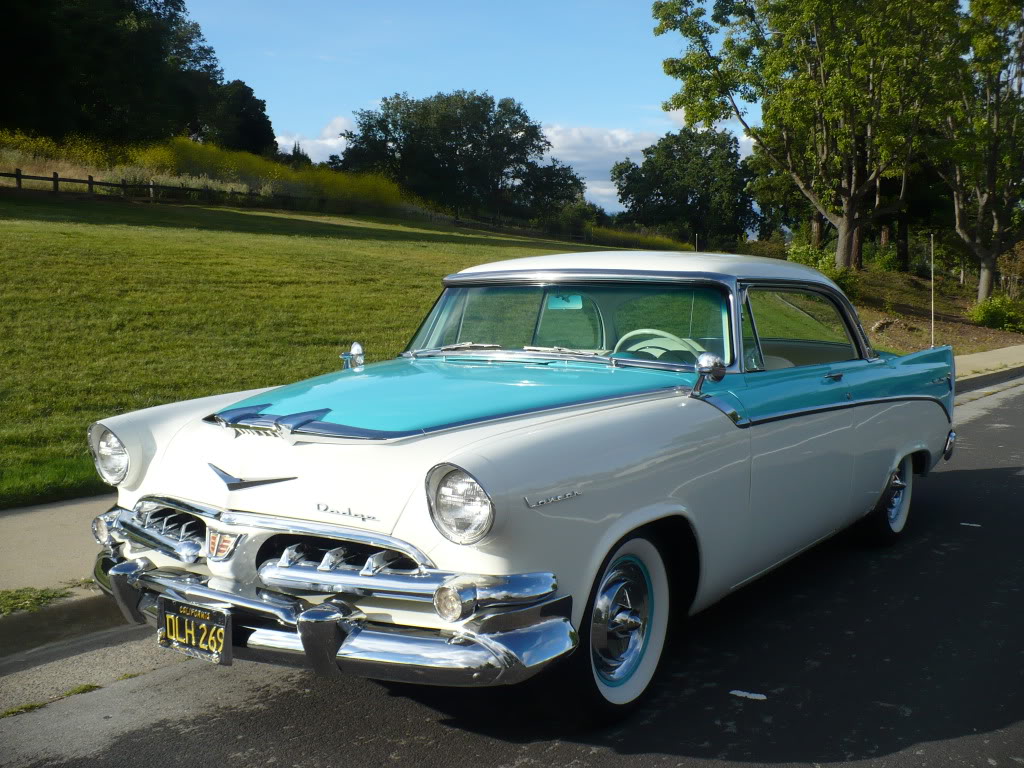
Automakers may have been guilty of stylistic excesses in the 1950s, but Dar still remembers fondly tri-tone paint jobs, 4-door hardtops and fins that soared into the sky.   He also loved the names of 50s vehicles, like the nomenclature affixed to the 1956 Dodge Coronet Custom Royal Lancer, shown here.


Cadillac, as well as Lincoln, recently joined other luxury automakers and name their new models using a combination of capital letters, not a “noun.”  Gone are Cadillac Coupe de Ville and Lincoln Town Car.  Say hello to ELR (new plug-in hybrid by Cadillac, shown) and MKZ (Lincoln’s replacement for the Zephyr.)
-->
 
Here’s a question for the readers of this column.   Given a choice, would you prefer that automakers name their vehicles with letters and numbers (referred to as an alpha-numeric name) or with nomenclature based on a usually common word? 

Do you like the sound of a car being named A8 or Coupe de Ville?  Does 328i ring your bell louder than Mustang Boss?  It appears that car buyers are opting for the alphanumeric lingo.  In the past ten or twenty years, it seems that almost all the automakers – especially those selling luxury vehicles – have abandoned using nouns or names and all have embraced using a blend of letters (mostly capitalized) and numbers (some making sense – like indicating size of engine or length of the car and some signifying nothing).

Credit has to be given to the three major German luxury brands for marketing their vehicles using alphanumeric names over a long period of time and becoming extremely successful.  While A4 Audis, C-class Mercedes-Benzes and 3 series BMWs are selling like hotcakes, I for one, really wish that automakers had stuck with using old fashion names for their vehicles.

I have a couple of reasons for feeling this way about vehicle names. 

This may only be a problem for me, but I have a devil of a time remembering car names that aren’t nouns.  When Cadillac started switching its car model names to all capitalized letters it was fairly easy for me to remember their offering’s new names. 

The Deville Touring Sedan became the DTS, the Seville Touring Sedan became the STS and the Catera became the CTS.  That made some sense to me.  I wasn’t happy that Deville became DTS but at least I could remember the name.

Then Cadillac introduced the SRX crossover and the XLR roadster.  It took me a long time to remember those two new names.   The X used in SRX was a good reference, because most of the new crossovers were probably all-wheel drive and X is often used by automakers to identify that feature.    But what the heck does SR stand for?

And then along came the Corvette-based XLR.  It didn’t have all-wheel drive but still had the X in the name.   I eventually remembered the new names, but they don’t come to me in an instant.

The new names must be working for Cadillac because the GM luxury marque isn’t giving up on using the three cap letters to name their new models.  At the recent Detroit auto show, Cadillac introduced a new model called the ELR.

Can you guess what those letters stand for?  In some ways, the name ELR makes some sense.  The ELR is Cadillac’s version of Chevy’s Volt plug-in hybrid model.  Unlike the 4-door Volt, the ELR is a two-door sporty coupe.  Can we assume that the E stands for electric and the L stands for luxury?  Now if only the ELR was a little convertible, I could than make the argument that the R stands for roadster.

As it now stands, I have no idea what the R stands for and I guess it doesn’t matter, as long as I can remember the new car’s name.

Again it may be my age, but I’m from an era when there were cars built and sold that had really wonderful names.   I recall going to the dealer in Lapeer and sitting in an Eldorado Biarritz convertible or seeing in the catalog the photos of the Cadillac Eldorado Seville and Eldorado Brougham.  Just saying those Cadillac names would make folks feel wealthy and important.

Over at the Dodge dealer you could put you money down for a Dodge Coronet Custom Royal Lancer (the Lancer indicated it was a hardtop.)  My tongue and brain feel better saying Coronet Custom Royal Lancer than saying 750i or Q50? 

I’m really pleased that domestic makers are still coming up with new names that don’t have cap letters and numbers in them.   Chevy moved from Cobalt to Cruze in naming its most recent compact car.  The Bow Tie brand still calls its family sized cars the Impala and Malibu.  They didn’t even think of changing the Corvette’s name when the seventh generation of the iconic sports car was introduced in January.

Dodge likes to use names from the past.   They have the Charger, Challenger and just brought back the Dart name.  That was a good move.  Chrysler uses numbers in calling its full-size sedan the 300 but that makes sense.   The highly regarded 300 letter series performance cars of 1955 to 1965 have defined the brand.

Ford and Chevy has introduced new models in the past with names that start with the letters F and C respectively.   For a period of time back in the sixties, all Chevys had to start with the letter C.  There was the Chevy Corvair, Chevy II, Chevelle and Camaro.

Ford followed suit with the Falcon and Fairlane.  They broke the “F” tradition in 1964 when choosing a name for their pony car.  Instead of Filly, they selected Mustang.  Chevy weaned itself of the C tradition with the Monte Carlo and later the Lumina, Malibu, Monza and other models.

Of late, Ford is back to naming new offerings using the letter “F.”   The Focus and Fusion being current examples.

Perhaps the automakers are drifting into alphanumeric names and away from using nouns because the good ones like Mustang and Impala are already taken.   Of course, if you are Toyota, you can always just come up with interesting sounding names like Camry and Yaris and find buyers galore.  I checked my dictionary and neither of those words are listed.

Are there still good names available for automakers to use?  I think so.  I don’t have time to leaf through the dictionary to find some examples but somewhere in my Funks and Wagnall there must be a winning name that we can all pronounce, spell and relate to. 

We can then look forward to the introduction of a new Chevy Arapahoe pickup and not a Chevy MPUX4 (that stands for massive pick up with four-wheel drive, in case you wonder). 

I’m going to post this article on my blog site (see address at end of column).  I’d like to hear your feedback on my auto names observations.


Friday, February 08, 2013

Dar's and Chuck's top ten beautiful and homely cars

 
I’m writing this column in the south, enjoying 70-degree temps and observing from afar the frigid and snowy weather that engulfed the Midwest just after I departed St. Joseph.

Joining me is my good friend Chuck Hassel, a fellow car nut who grew up in the Chicago area but now resides in South Carolina.  We’ve make our visit south each January to escape the colder northern climes (well, at least I do) and, more importantly, to discuss cars.   We love all kinds of cars, be they new or old.

Chuck has been ogling cars since he was a little kid.   His education includes degrees in engineering from Purdue and product design from Art Center College in California.

I showed Chuck a copy of my last week’s column about the Hemmings Classic Car editorial with Richard Lenitello’s eight ugliest cars and my reaction to his selections.   Naturally we began coming up with ugly candidates of our own.   We agreed up with our top ten list.

We also thought it would be fun to see if we could come up with a list of the ten most beautiful cars.   It was a challenge, but we did it. 

So, behold, our list of the ten homeliest (ugly seems too cruel a word) and ten most beautiful American cars ever offered.  After each vehicle selected we have added a brief remark on why it was selected:

TEN HOMELIEST VEHICLES:
            1937 - ‘39 Willys (bug-eyed headlights and a pointed snout)
1958 Buick (massive looking, a ponderous chrome-mobile)
1958 Ford (a failed attempt to duplicate the look of the new 4-place T-bird)
            1958 Oldsmobile (see 1958 Buick above)
            1958 Packard (stacked fins and tacked-on quad headlights, a sorry end to a great marque)
            1961 DeSoto (unrelated dual grille openings, clunky-looking taillight housing)
            1961 Plymouth (cabbage grater grille with Halloween headlights that scared small children)
            1980 Ford Thunderbird/Mercury Cougar (the stylist must have lost their French curve, a box was their inspiration)
            2000 – ’05 Chevrolet Monte Carlo (a crisp design that obviously sat too long in the hot sun)
            2001 – ’05 Pontiac Aztek (not sure if it’s a van or a car but not Pontiac’s best effort)
High on many automotive lists of homely cars is the overwrought 1958 Buick, shown here in the Limited series.


The rather scary front end styling of the 1961 Plymouth has been said to be so ugly it scared small children.  It certainly wasn't designer Virgil Exner's best efforts.


TEN BEAUTIFUL VEHICLES:
           
            1933 Pierce-Arrow Silver Arrow (one of the first American vehicles to feature breathtaking aerodynamic lines that set it apart)
1936 Cord 810/812 (Gordon Buehrig’s Cord was a styling masterpiece, radical for its time, still eye candy today)
1939 Lincoln Continental Mk 1 (One of Edsel Ford’s best efforts, providing a must-buy luxury car for the Palm Beach set)
1953 Studebaker (Studebaker stunned American car buyers with Raymond Loewy’s European inspired design)
1955 Chevrolet (featured a Ferrari grille, V-8 power and all-new body of classic simplicity)
1960 Dodge Matador/Chrysler New Yorker (perhaps Virgil Exner, Sr.’s highest achievement and his most successful fin effort)
            1961 Lincoln Continental (award winning then, still stunning to look at)
            1966 Buick Riviera (Words like elegant, graceful and sophisticated are used to describe this Dave Holl’s masterpiece)
            1970 ½ Chevrolet Camaro (in production for 11 years, the crisp, clean  Italianate pony car was a huge favorite) 
1971 Plymouth Satellite coupe (a muscular yet elegant car, it’s bold loop bumper was a perfect compliment to the athletic car)


 This photo, taken at the Concours d'Elegance of Southwest Michigan in St. Joseph, shows me standing in front of one of Studebaker's prettiest coupes ever.  The 1953 - 54 Commander coupe was designed with input from internationally known Raymond Loewy.  Most best looking car lists include this design beauty.

Above is the iconic and great looking 1961 Lincoln Continental 4-door convertible.   Considered by many to be the finest looking Lincoln ever introduced.   Wouldn't it be great if Lincoln could return to market a Town Car-like model that has the impact of this landmark luxury model.

If you don’t recall what some of our selections look like and a photo is not shown, use your computer’s search engine and type in the year and car.  Photos galore will appear to remind you just how ugly or beautiful these cars were.


Saturday, December 15, 2012

I visited the AACA Fall Meet in Hershey and spotted these great automobiles.

This pretty Mercedes had a wood IP!

A classy Mercedes

This 1958 Dodge Sierra wagon was for sale and the price was right.

If I'm not mistaken, this is the first time a two-tone paint stripe was ringed by chrome trim.  I've read that Virgil Exner, Sr. was responsible for this colorful option.

An Exner-designed 1961 Chrysler New Yorker convertible. 

I've always loved gold nomenclature on a white painted automobile.  A 1962 Chrysler

Pretty pre-War Cadillac with two-tone paint.

I've always loved pastel pink and white paint jobs, especially on the 1958 Edsel Citation.

Only Cadillac could get away with offering fins like this and find so many buyers.

Most people like the fastback version of the 1967 - 69 Barracuda.  But I like the coupe look too.   The concave rear window was very unusual for a low priced car.

Gorgeous custom interior on 1966 Corvair 4-door Monza


Prettiest fins on the market.  1959 Buick LeSabre

Unusual trim piece on the 1962 Dodge Polara 500

Virgil Exner seemed to love placing headlights in unusual places.

Wish today's cars could be optioned with these colors.

Sunday, November 25, 2012

Capturing the art of the auto


-->
The tail fin defined the Cadillac during the fifties and none shouted Cadillac like the P-38 Lightning aircraft-inspired tailfins found on the 1948 – 1956 models.  A close-up shot of this 1955 Cadillac Eldorado iconic fin best personifies the luxury brand’s tail fin legacy.


I’ve been eyeballing automobiles since 1954.  Regardless of where I am – in a parking lot, on the freeway or on Niles Avenue – my eyes screen each car that passes by.   I can’t help it.

In the 58 years since my automotive awakening I’ve acquired a fondness for a number of the older cars once spotted on the highways.  Of late I have made an effort, when attending car shows, to capture images of these favorites with my camera at car shows.

With some cars, I like only a portion of the overall design, like the grille or the rear taillight.  So over the past many years, I’ve been drawn to photograph only a section of the vehicle in an artistic fashion.   Some have actually come out pretty nicely and can almost be consider works of art – at least to my eyes. 

I was pleasantly surprised recently when someone visited the Concours d’Elegance of Southwest Michigan’s Facebook page and wrote a complimentary remark about a photo I had posted of a 1955 Cadillac Eldorado rear quarter fender view.  I had used this particular photo when I announced the recent decision by the Concours National Advisory and Executive Boards that the Cadillac would be the featured marque in 2013 to commemorate the luxury automaker’s 110th anniversary.

The Facebook visitor’s comment, “This picture in undeniably beautiful” made my day and got me to thinking about some of the other photos of cars that I’ve taken over the past 10 – 15 years. 

So I opened my iPhoto album – now filled with 5,452 images – and looked for my favorite pictorial “car parts,” so-to-speak.   I found a number that really ring my bell.

The aforementioned 1955 Cadillac photo is at the top of the list.   If you want a photograph of GM’s luxury division that say loud and clear “I’m a Cadillac,” then I feel this photo accomplishes the task.   I only shot the tail of the car and from slightly above.  The famous P-38 Lightning aircraft-inspired tail fins were used on the Cadillac from the 1948 original until through 1957 model.

This picture resonates even though the trunk on the vehicle in the photograph isn’t completely closed.  The strong sculptural statement of the finned taillight simply carries the day.

Another photo that garners comments when I share it is one I took many years ago while visiting Carlisle, (Pa.) Chrysler Nationals.  I’m a huge fan of Virgil Exner, Sr.’s 1955 cars that featured the “Forward Look.”  But what makes my photo of this particular Dodge notable isn’t the car’s handsome grille, but rather the dramatic effect caused by reflection in the chrome trim from the overhead stripped canvas tent.  It reminds viewers of peppermint candy and makes the photo memorable.

I often discover that shiny car surfaces make great mirrors for self-portrait.   In 2009 at Hershey, Pa., I came across a really nice black 1954 Buick Special. 

In 1954 GM introduced all-new Olds, Cadillac and Buick models.  I liked the cars a lot because they all featured the first mass-produced wraparound windshields.  Of the three GM luxury cars, I have always favored the Buick and its rear subtle fin.  When I spotted the black 1954 Special at Hershey, I had to take a photo of that fin.  The self-portrait was just a bonus.

I’m not savvy enough to use PhotoShop.   I take a photo and if it turns out great, it’s pure luck.   I attended the since-discontinued Venetian Festival car show some years back and took a photo of a nice two-tone 1955 Chevy Bel Air.  

This image isn’t quite a work of art but it captures perfectly the essence of the new, clean styling of the popular Chevy.  Most folks seem to like the 1957 Tri-Five Chevy better than the initial ‘ 55, but I’ve always been won over by the clean, pure lines of the original.  

Few cars are introduced that are perfect in every way.  With the ’55 Chevy I wouldn’t change a thing.  The 1955 Chevy is one of those perfect cars, in my opinion, and this photo shows why.  This cleanly designed, unadorned beauty represents the very best from GM’s top designer Harley Earl.

I admire all classic Packards and can understand why the luxury brand remains a favorite of serious collectors.  At Hershey this past fall I spotted a beautiful roadster from afar.   I wasn’t drawn to it because it was a Packard, but because of its beautiful color.  It shouted, “Look at me!” 

On closer inspection, I became enamored by the beautiful wheels on the 1929 automobile.   Disc-like, they were painted the same color as the car’s body.   Most importantly, in the wheel’s center, was the traditional Packard red hexagon.  This photo captures flawlessly the combination of colors and shapes that work beautifully together and pleases the eye.

Great art?  No, but it reveals perfectly the elegance of the era.

If you would like to see my photos that I’ve mentioned in today’s column in high definition, please visit my blog site at http://darscars.blogspot.com/.  I will post all the photos that I’ve mentioned.  I also welcome your comments on my blog. 

By the way, if readers use Facebook and have not yet visited the Concours d’Elegance of Southwest Michigan Facebook page (www.facebook.com/ConcoursSWMI), please do so.   And while on your visit, please “like” us.   It will keep you connected with the many activities of the fundraising event.


 Take a shiny, curved chromed surface and add color stripes from an overhead tent and you have a dramatic photograph.  This 1955 Dodge Royal Lancer was snapped by Dar at a Carlisle, Penn. Chrysler National show a few years back.


Whether up close or from afar, an automobile painted a gorgeous color will capture attention.   And none did it better than this 1929 Packard at Hershey.  Dar snapped the automobile’s wheel, capturing both the elegance of the wheel design and the stunning turquoise and red color combination.


 A 1954 black Buick Special rear fender makes for a perfect mirror to caption a self-portrait.  This photo may not be great art, but it speaks to the writer because the ’54 Buick is a favorite of his.


Both Dar’s grandfather and brother owned a 1955 Chevy.  The all-new car was one of Chevrolet’s most significant models, as it introduced not only its famous small block V-8 but also fresh, clean new styling, as shown in this rear quarter view that still looks fabulous 57 years later.


Sunday, November 04, 2012

Big grilles, side sweeps and fender jewelry

The current "hot" automotive design trend used by designers is the sculptural side sweep.  Utilized successfully on the Hyundai Sonata, the design device gives a vehicle the appearance of being longer and in motion.  In addition to sedans, coupes and convertibles, the side sweep is also found on a number of crossovers and a few minivans.

Auto News trade journal writer Lindsay Chappell wrote a column a while back on auto design.  He started his article with this statement:  “When it comes to designing a new car, it’s really, really hard to do anything new.  Disassemble the pieces of the coolest new designs, and the chances are you’ll have the funny feeling that you’ve seen them all before.”  I can add an amen to that!

Oliver Stefan, head of design for the Volkswagen brand, explained to Lindsay that auto designers using the same design elements on different models around the global industry can’t be helped.  Stefan explains, “I have been working on new design ideas before and I will go to a motor show and look around.  And I will see the same idea already showing up in other cars there.   It’s a remarkable thing.”

According to Stefan, designers from around the world read the same car magazines, go to the same movies and they see the same technologies.  He says similar design cues are not the result of corporate espionage but “just…the same ideas floating up in different places.”

Chappell then goes on to list the long list of auto design elements found on a large number of vehicles worldwide.  Let’s start with one that has been with us the longest, the stylized side vent on the front fender.   I don’t recall who started this practice on a family sedan or SUV, but in the old days they were only found on roadsters. 

Today, you find the chrome pieces on everything from the most expensive SUV (the Cadillac Escalade is a good example) to an inexpensive sub-compact like on the little Ford Fiesta.  But the trend is fading and fewer vehicles use the useless design device.

The current “big thing” design element is the use of a noticeable accent line along the side of a vehicle.  It’s hard to find either a car or crossover without one.  It has become so prevalent on the smaller crossovers that this writer has a devil of a time telling them apart, as they all look the same. 

The ubiquitous accent line can be seen on dozens of vehicles with the Hyundai Sonata being the poster child of the marque using it early and with great success.  According to designers, the angled line, starting high at the rear fender and “lunging” forward and downward to the front fender, give the impression of motion.

Another universal adaptation of a design element mentioned by Chappell is locating the radio antennae on the top of the roof back by the rear window.   According to Chappell, Volkswagen had the clever idea of offering this feature on several models several years ago.  Now the design cue is found on nearly all models of vehicles, from stately luxury sedans to minivans.  According to Chappell, the stubby little radio knob on the roof gives vehicles “ the personality of a remote-controlled toy racer.”

I’m sure most readers have noticed the increase use of LED “eye lashes” on the front-ends of a number of vehicles on sale today.   Chappell shows a photo of an Audi as one of the first to using this design element across all of its models.   In effect, the bright line of lights serve as both a clever and distinctive design cue and also effectively serves as a bright daylight running light.   While not all of the American brands have embraced this newest look, it probably will only be a matter of time before the trend is more widespread.  The all-new Cadillac ATS and XTS have the feature, as does the refreshed Chrysler 300 and 200.  Even Ford has joined the parade and offers the LED lights on a number of new models including the Escape.

Car nuts reading this column are probably familiar with the 2002 BMW 7 Series and its controversial “Bangle Butt.”  Devotees of BMW who didn’t like the new look gave the derisive term to the car.  They weren’t happy when BMW head designer Chris Bangle opted to use a larger and higher rear end than previous generations. 

Well, observers may have not liked the new look but BMW buyers did.   That generation of the 7 sold better than any other.  In the ensuing decade a number of luxury automakers have adopted the look as well as others, including GM with the re-skin of the Chevy Malibu.

Other styling trends mentioned by Chappell that seem to have caught all designer’s fancy include the roof spoilers on crossovers that extend over the rear window.  The Civic CR-V and the Chevy Equinox are examples.   Oversized radiators are the rage with many brands.  Probably the biggest advocate of the big grille is Audi on the car side and GMC with its Terrain and Ford with the Super Duty on the truck side.

I’ve complained in a previous column about poor visibility in current vehicles.  It seems that all the automakers have followed the recent trend in putting really thick “C” and “D” pillars on cars and crossovers/SUVs.   This look is cool but I hope it only stays popular for a short time. 

So there are a slew of auto design elements that seem terribly derivative.   Auto News’ Lindsay Chappell asked, “Why is that.”  Clay Dean, former executive director of GM’s global design and Cadillac design director, told Chappell that there are two primary reasons why this has happened between competitors.   Says Dean, “We have crash standards and pedestrian protection guidelines that tell us what we have to do”  “How far can a hood deflect before it hits the engine?  Those issues affect what the front of a car looks like.”

Dean also adds, “If a design shows up at an auto show today and people like it, you’re going to see those same trends on other concept cars within the year.  I’m not sure that’s a good thing.” 

So will we ever see a huge departure in how a vehicle looks in the foreseeable future?  Sadly, it doesn’t look that way.   For cars and trucks to sell well, you have to please the masses.  Taking chances on a bold, new, never-before-used automotive design is a risk few, if any, automakers are willing to take.

Tuesday, January 13, 2009

NAIAS Detroit Auto Show 2009 - Automakers feel blue but look green


The 21st annual North American International Auto Show at Cobo Center in downtown Detroit could have been a somber place this past weekend. But for an industry under seige for the better part of 2008, the annual media preview at the NAIAS last Sunday, Monday and Tuesday was an upbeat and fascinating place to be. Granted, the fancy vehicle displays that were the norm in past years were replaced with much simpler sets, especially those from the Domestic Three automakers. Gone were the elaborate and impressive exhibitions and in their place were dramatically simplified displays. This year the vehicles took center stage, not the ostentatious staging found in year’s past. Also missing at Cobo were the many amenities that were provided to the 6,000 + journalists and photographers in the past. The tasty free lunches and dinners were dropped by the automakers as a cost saving move. Gone, too, were the fancy productions that were used to introduce the many new vehicles. Instead of live bands, synchronized lighting and celebrities galore, the introductions were low key and business-like.

It was a terrible year for the automakers in 2008 with sales in the U.S. down over 3 million units. With profits a distant memory, some of the automakers cut way back on their car show efforts. There were exceptions. Foreign automakers like BMW, VW, Audi, Toyota and Mercedes-Benz sported brand new displays that undoubtedly cost millions of dollars to design, build and assemble. Elsewhere in the show, perhaps in response to the ire that the Domestic Three CEO’s drew from congressmen in D.C. for flying in corporate jets to attend hearings to obtain bridge-loan funds, the Domestic Three makers cut back on their display costs. Surprisingly, some automakers didn’t even show up. Japanese biggie Nissan was a no-show, as were smaller brands like Porsche, Suzuki and Land Rover.

But let’s forget the gloom and doom. The foreign and domestic automakers did have some new product to show and it was educational to attend the many press conferences. This year, like no other, was the year of the engineer. The push to make cars and trucks more Earth-friendly is placing a burden on all makers – foreign and domestic alike – to come up with propulsion systems that give improved gas mileage and also produce less emissions. The automakers certainly now see the task at hand and a massive effort is being made to bring low and zero emission vehicles to the market quickly. While designers and stylists will always be important, presently scientists, engineers and researchers are bearing the brunt of the burden to bring clean and efficient vehicles to market quickly and inexpensively.

Like in past years I had the opportunity to not only listen to the speeches and take photos but also to sit in many of the new vehicles – production and concept cars and trucks alike. It is not an exaggeration to say that the three-day media event at the NAIAS is one of my favorite times of the year. And why not! I get to see fabulous cars and trucks for the first time. I have the option to go up and talk to the bigwigs and designers if I wish. And I relish the chance to sit in the concept cars, a privilege given only to members of the media.

The NAIAS kicked off on Sunday morning with the announcement of the prestigious annual North American Car and Truck of the Year awards. This year’s car recipient was a surprise with the Korean upstart Hyundai winning with the four-door Genesis, a new top-end V-8 powered luxury sedan. Watch out Lexus, Mercedes, Cadillac and other luxury brands, there is new kid on the block. Not as surprising, taking the truck crown for the third time in 12-years was the Ford F-150.

In all, there were over 60 new production and concept vehicle debuts. Space doesn’t permit me to comment on all of the debuts but there were several significant vehicles that bear mentioning. I was most interested in seeing for the first time the several new domestic offerings. Creating the most excitement by far and my candidate for Best of Show is the highly appealing and expressive Cadillac Converj. Created with the Voltec system engineered for GM’s highly anticipated Chevy Volt plug-in electric car, the bean counters at GM should find it reasonably inexpensive to put the Converj into production and give Cadillac a nice competitor to combat the many hybrids offered by Lexus and other luxury makers. Without a doubt, the gorgeous new Caddy drew the biggest crowds at the show.

There were many other “green” cars at the show and I’d like to comment on two significant production vehicles. The Toyota press conference to announce the third generation Prius hybrid was filled to capacity with journalists wanting to get the first look at this segment-leading car. Toyota has produced the Prius since 1997 and has sold over 700,000 units in the States alone. With improvements, the 2010 hybrid will now deliver 50 mpg and offers many new features to attract more buyers. Not to be outdone, Honda introduced the second generation of their Civic hybrid, and an all new car getting the name once used on its two-passenger hybrid – the Insight. Both vehicles are distinctive looking and will undoubtedly be successful in the marketplace.

This post is getting long, but I do want to mention a few vehicles that readers should seek out if a Detroit Auto Show visit is in the works. Audi has a winner with the Sportback concept. Ford may have a homerun with its handsome new Taurus using design elements found earlier in the 2006 Interceptor concept. Close behind the Caddy Converj concept in star appeal is the Volvo S60 concept sedan. It’s Volvo’s version of the popular four-door coupe cars now offered by Europe’s luxury leaders. Caddy has two other winners worth looking at – the SRX crossover replacement and the CTS Sportwagon. Lincoln is finding its groove and the Flex-based crossover MKT is worth the look. If you like the boxy Scion xB, then you will also enjoy looking at Kia’s new sassy crossover, the Soul. Chrysler surprised everyone with a gorgeous looking sedan called the 200C. The car is rumored to be the candidate to replace the present popular 300 sedan. The four-door looker has a hybrid power system, one of three models that the company introduced to the media. The all-new Chevy Equinox and Buick LaCrosse will make those brand’s dealers happy when they arrive this summer. Buick designers have brought back the iconic side sweep found on all Buicks back in the 50s.

Want to take a spin in a low or zero emission vehicles? Be sure to venture into the basement of Cobo Center and be amazed at the “test track” created by the Michigan Economic Development Corporation folks. Amongst a forest of mature trees, water falls and blooming spring flowers is a winding road. It beckons a driver to follow it in a circuitous route the whole length of the huge but lovely space. Quite an experience! The MEDC hopes to promote to worldwide auto executives on hand at the car show Michigan’s strength in R&D and alternative energy innovation.

The Detroit car show opened yesterday and will run until Sunday, January 25. For ticket information and directions, go to www.naias.com or call (248) 643-0250. Tickets are $12 for adults. (Converj Concept image © GM Corp.)

Saturday, June 24, 2006

A very special Father's Day gift


Everyone wants to find the perfect gift for dad on Fathers Day. But what to buy? He has all the ties that he needs. I have a story that just might be the template to follow next year when deciding on a perfect gift for father.

It's pretty universal that most dads like cars, especially the car that they remember from youthful experiences. Who can forget the car they learned to drive in? Or the car they owned when dating their now-wife?

This is a story about a dad in the Twin Cities, who wishes to remain anonymous, who experienced the Father's Day of a lifetime two years ago when his wife and two daughters went to a lot of trouble and surprised him with a gift of the old car of his dreams.

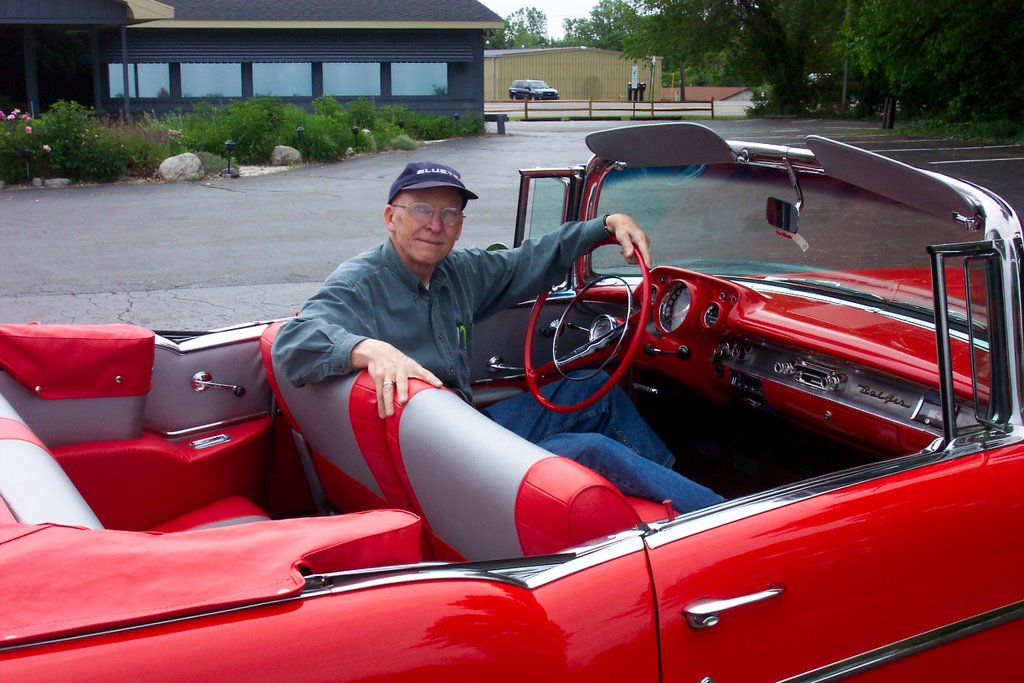
It is a fascinating story, filled with disappointments, surprises and a happy ending. The story starts in 2003 and ends on Father's Day, 2004. The dad in question, a hardworking, A-type, workaholic with a business of his own, had always wanted a 1957 Chevy. He had owned one as a youngster but it was what he called a "dog." The hardtop Bel Air was powered by the old "Stovebolt Six" engine and equipped with the Powerglide 2-speed transmission. This made peeling rubber at the stoplight virtually impossible. He was looking for a '57 Chevy - now one of the most sought after cars of the 50s - and he wanted not the old Stovebolt under the hood, but one with the 283 cubic inch small block V-8 engine with a 3-speed manual transmission.

Knowing all this, his wife set into motion a search for the car of her husband's dreams. She started out by calling Watervliet resident Les Fairbanks, president of the local Southwestern Michigan Car Collectors club. He offered to help. After reading one of my columns about the North American International Auto Show, she gave me a call and asked for my advice.

All of her efforts were fruitless until she began to use the Internet. On the Net she had success in finding '57 Chevys for sale but was startled by the high prices being asked and also didn't have a clue if the cars being offered for sale were decently restored. Then a light bulb went on in her head and she thought of calling her husband's friend Rich Kepner. Rich, known by most old car owners in the region, is the president and owner of Kepner's Precision Auto Krafters located on Nickerson Road in Benton Township.

Rich, an old car collector himself, operates a highly regarded body shop and also is very involved with restoring old cars. Readers may recall an article on a restoration project undertaken by Rich for Lonnie Ali in The Herald Palladium a couple years back. He and his crew totally restored Mohammad Ali's Rolls Royce.

Rich agreed to help find a car. In the months that followed he attended two Kruse auctions at Auburn and followed up on leads around the country. Finally two cars were located by the wife on the Internet that warranted a look-see in the Midwest - one in Illinois and one in Wisconsin. During the search, the wife had decided that if she was going to buy her husband a '57 Chevy V-8, she wanted him to have a convertible. Luckily both of the Midwest cars were convertibles, both had the required 283 engine and both had stick transmissions.

Rich jumped into his rig with the trailer and headed west. The Guerney, IL car had an amateurish restoration and did not meet Rich's minimum expectations. He couldn't reach the Wisconsin owner and returned to Michigan. But a call the next morning to the Brookfield, WI owner gave Rich some cause for hope. The car had all the equipment that Rich was looking for. The California-built, Texas-owned 1957 Chevy was a convertible, it had the Power-Pak 283 4-barrel carburetor V-8 and it had the "three on the tree" transmission. He jumped into his trailer rig again and headed west.

This time he wasn't disappointed. A ten-year old restoration still looked good on the Chevy. The car even had its original floor pan, a good sign of a rust-free car. The only problem was price. The wife had set a maximum price that she could pay and the Wisconsin owner wanted a 20 percent premium over her minimum. Rich made a quick call to the vacationing wife, who was on a ski trip at the time.

The situation put the wife in a very tough spot. She knew her daughters wanted this car as a very special Father's Day present for their dad. While the dad had been a very busy businessman all is life, he had always made the effort to be there 24/7 for them, at school and athletic events, as they grew up. This car would be a perfect gift to show their love and support.

She didn't know where she would find the additional funds, but she decided on the spot to give the okay for Rich to buy the car. The convertible with 60,000 miles on the odometer was on the trailer in no time and heading for Kepner's shop.

The car was in really good shape and it took Rich and his staff only a few months to bring the car up to Concours standards. Then the fun began.

The youngest daughter was to graduate from Northwestern University on Father's Day 2004. Elaborate plans were made to have the convertible delivered to the dad at the graduation party. Because neither daughter could drive a stick shift, they asked their grandfather to do the honor.

Listening to comments from both the wife and from Rich about how the dad responded to his gift from his family was heart warming indeed. A lot of tears of happiness were shed that day, mostly by the dad. The dad himself admits that he cried like a baby for several days after. The wife tells a wonderful story of how the dad, while taking his Chevy on a drive down Red Arrow Highway soon after Father's Day, would acknowledge people's "high fives" with the boastful retort "This is my car!"

As a car guy, I can't think of a more appropriate gift for Father's Day than receiving the keys to a special car. It would be a thrill of a lifetime!

Post Script: Ironically, the car I learned to drive in was a 1957 Chevy. Only my dad's car was not a Bel Air, not a V-8, not a hardtop, didn't even have an automatic tranny. Instead, my high school ride was a lowly 2-door One Fifty sedan. The only option on the car was a two-tone paint job. It was a slug but it would be a hoot to have it sitting in my driveway on Father's Day!