Showing posts with label Cadillac. Show all posts

Tuesday, April 16, 2013

Seeking special Cadillacs

What's a Cadillac without a fin.
 
This time of year I really look forward to the daily visit from my mailman.  The deadline for vehicle entries for the upcoming Concours car show in August is approaching and I receive a number of applications each day.   I have a smile on my face when I open each envelope; eagerly anticipating what vehicle has been submitted.

When all the entries have been received by mid-April and made into a PowerPoint presentation, the volunteer Concours selection committee will meet and review all the submitted vehicles.  From the volume of mail so far, it appears we will have a record number of vehicle owners wishing to have their car, commercial vehicle, motorcycle or bicycle in the fundraising event.

This year the Concours selection committee will again descend on Hickory Corners in late April and assemble in a meeting room of the Gilmore Car Museum.  From the submitted entries the committee will select approximately 90 vehicles, including a representative sampling of Cadillacs, this year’s featured marque. 

As I write this column, 12 Cadillacs have been submitted.  That’s a good number but we are short of Cadillac entries for the 1915 – 1940 period and for the 1950s.  The decade of the sixties is well represented with a large number of entries submitted.

Naturally we want a selection of Cads that represent the luxury brand throughout its long history.  We are especially interested in showing some of the magnificent Classic Cadillac offerings from the twenties and thirties and also two other key examples; a 1948 model to show the beginning of the fin age – which Cadillac introduced that year – and the iconic 1959 model that took the fin age to its outrageous zenith.

There are two “special feature” classes in the Concours this year.   We are seeking a number of vehicles from the turn of the 20th century for the “High Wheeler” class and a few more for the “Lady Owned Cars” special class.

Fortunately, we already have a nice selection of entries for the “Lady Owned Cars” class.  Female interest in the collector car hobby is growing and this year the Concours leadership thought it was time we highlight this car-collecting phenomenon with a special group.

So far we have no entries for the “High Wheeler” class.   If none are received by April 20, committee members and I will get busy and contact the various high wheeler car clubs in the country and see if we can stir up some interest.

For those not familiar with a high wheeler vehicle, here’s a short history lesson.  The high wheeler is an early car body style that is unique only to the United States.  As the name implies, vehicles called high wheelers were built with slender, large-diameter wheels beginning in the late 19th century.  The last high wheeler was probably built around 1910.

Prior to the advent of gasoline engines, high wheelers were powered by electric motors or steam engines.  The high wheeler’s popularity began to wane when standard automobiles became both less expensive and more sophisticated.  It has been written that when Henry Ford introduced the Model T, the high wheeler era rapidly came to an end.

Automobiles with the slender high wheels often used solid tires.  The wide diameter of the wheels provided ample ground clearance.  This was a necessary feature because most roads in America at the time were primitive.  High wheelers also were designed with a wider track than those found on a standard automobile.

The high wheelers were available in many body styles (utility vehicles, runabouts/roadsters; some with detachable tonneaus) and often shared features found on horse-drawn wagon like wood-spoke wheels, similar suspensions and boxy bodies made of wood.

Over 40 high wheeler companies were in business at one point in the United States.  A few had names that might be recognizable – like the Cole, Duryea, Economy, International Harvester, and Sears – but most had a moment in the sun and then disappeared.

Attendees of the Concours car show may recall last year the 1909 Economy G Surrey high wheeler that was featured in the “Family Owned Vehicle” class.  Brady and Emily Mann of Roanoke, IL brought the Economy that his grandfather had purchased new over one hundred years ago.

Readers who know someone who owns a well-preserved high wheeler is urged to contact me.  We’ve had a few of high wheelers in our show in the past and the quaint and almost pre-historic looking automobiles are huge crowd pleasers.

The Concours featured designer this year is retired GM designer Bill Porter of Whitmore Lake, Michigan.  I interviewed Bill a while back and will share highlights of his exciting career with readers in an upcoming column.  

Bill headed both Pontiac and Buick design studios during his career.  Without a doubt his most notable effort while at Pontiac was overseeing the creation of the second gen 1970 Pontiac Firebird.  He takes extra special pride in developing the Firebird Trans Am of that period. 

Bill will join narrator Ed Lucas during the noon Pass in Review and discuss all the cars in the show that he had a hand in designing.   Take a look at the list below and contact me if you or if someone you know owns one of these Porter-influenced vehicles. 

The Porter-designed cars we’d like to have in this year’s Concours include:
1968 – 69 Pontiac Le Mans and GTO, 1970 – 72 Pontiac Catalina, Bonneville, 1970 ?  – 73 Firebird and Firebird T/A, 1973 Pontiac Le Mans, Grand Am, 1978 Pontiac Grand Prix, 1985 Buick Electra, 1982 Pontiac Firebird, 1991 Buick Regal 4-door sedan, 1986, 1992 and 2000 Buick LeSabre, 1991 and 1996 Buick Park Avenue and Ultra and 1995 Buick Riviera. 

Mr. Porter, now in his eighties, is a dynamic speaker and will give a pre-Concours presentation on Friday night, August 9.  Details on location and time of the program are incomplete.  Watch for announcements in this column in July.

Sunday, February 10, 2013

Name or just a number

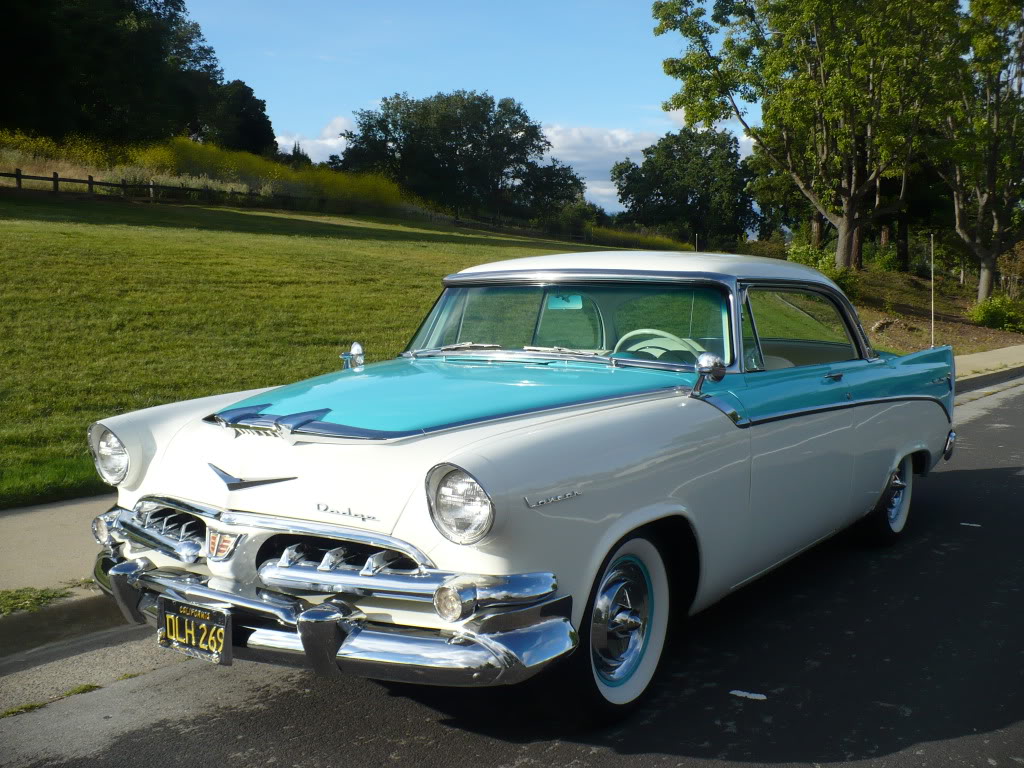
Automakers may have been guilty of stylistic excesses in the 1950s, but Dar still remembers fondly tri-tone paint jobs, 4-door hardtops and fins that soared into the sky.   He also loved the names of 50s vehicles, like the nomenclature affixed to the 1956 Dodge Coronet Custom Royal Lancer, shown here.


Cadillac, as well as Lincoln, recently joined other luxury automakers and name their new models using a combination of capital letters, not a “noun.”  Gone are Cadillac Coupe de Ville and Lincoln Town Car.  Say hello to ELR (new plug-in hybrid by Cadillac, shown) and MKZ (Lincoln’s replacement for the Zephyr.)
-->
 
Here’s a question for the readers of this column.   Given a choice, would you prefer that automakers name their vehicles with letters and numbers (referred to as an alpha-numeric name) or with nomenclature based on a usually common word? 

Do you like the sound of a car being named A8 or Coupe de Ville?  Does 328i ring your bell louder than Mustang Boss?  It appears that car buyers are opting for the alphanumeric lingo.  In the past ten or twenty years, it seems that almost all the automakers – especially those selling luxury vehicles – have abandoned using nouns or names and all have embraced using a blend of letters (mostly capitalized) and numbers (some making sense – like indicating size of engine or length of the car and some signifying nothing).

Credit has to be given to the three major German luxury brands for marketing their vehicles using alphanumeric names over a long period of time and becoming extremely successful.  While A4 Audis, C-class Mercedes-Benzes and 3 series BMWs are selling like hotcakes, I for one, really wish that automakers had stuck with using old fashion names for their vehicles.

I have a couple of reasons for feeling this way about vehicle names. 

This may only be a problem for me, but I have a devil of a time remembering car names that aren’t nouns.  When Cadillac started switching its car model names to all capitalized letters it was fairly easy for me to remember their offering’s new names. 

The Deville Touring Sedan became the DTS, the Seville Touring Sedan became the STS and the Catera became the CTS.  That made some sense to me.  I wasn’t happy that Deville became DTS but at least I could remember the name.

Then Cadillac introduced the SRX crossover and the XLR roadster.  It took me a long time to remember those two new names.   The X used in SRX was a good reference, because most of the new crossovers were probably all-wheel drive and X is often used by automakers to identify that feature.    But what the heck does SR stand for?

And then along came the Corvette-based XLR.  It didn’t have all-wheel drive but still had the X in the name.   I eventually remembered the new names, but they don’t come to me in an instant.

The new names must be working for Cadillac because the GM luxury marque isn’t giving up on using the three cap letters to name their new models.  At the recent Detroit auto show, Cadillac introduced a new model called the ELR.

Can you guess what those letters stand for?  In some ways, the name ELR makes some sense.  The ELR is Cadillac’s version of Chevy’s Volt plug-in hybrid model.  Unlike the 4-door Volt, the ELR is a two-door sporty coupe.  Can we assume that the E stands for electric and the L stands for luxury?  Now if only the ELR was a little convertible, I could than make the argument that the R stands for roadster.

As it now stands, I have no idea what the R stands for and I guess it doesn’t matter, as long as I can remember the new car’s name.

Again it may be my age, but I’m from an era when there were cars built and sold that had really wonderful names.   I recall going to the dealer in Lapeer and sitting in an Eldorado Biarritz convertible or seeing in the catalog the photos of the Cadillac Eldorado Seville and Eldorado Brougham.  Just saying those Cadillac names would make folks feel wealthy and important.

Over at the Dodge dealer you could put you money down for a Dodge Coronet Custom Royal Lancer (the Lancer indicated it was a hardtop.)  My tongue and brain feel better saying Coronet Custom Royal Lancer than saying 750i or Q50? 

I’m really pleased that domestic makers are still coming up with new names that don’t have cap letters and numbers in them.   Chevy moved from Cobalt to Cruze in naming its most recent compact car.  The Bow Tie brand still calls its family sized cars the Impala and Malibu.  They didn’t even think of changing the Corvette’s name when the seventh generation of the iconic sports car was introduced in January.

Dodge likes to use names from the past.   They have the Charger, Challenger and just brought back the Dart name.  That was a good move.  Chrysler uses numbers in calling its full-size sedan the 300 but that makes sense.   The highly regarded 300 letter series performance cars of 1955 to 1965 have defined the brand.

Ford and Chevy has introduced new models in the past with names that start with the letters F and C respectively.   For a period of time back in the sixties, all Chevys had to start with the letter C.  There was the Chevy Corvair, Chevy II, Chevelle and Camaro.

Ford followed suit with the Falcon and Fairlane.  They broke the “F” tradition in 1964 when choosing a name for their pony car.  Instead of Filly, they selected Mustang.  Chevy weaned itself of the C tradition with the Monte Carlo and later the Lumina, Malibu, Monza and other models.

Of late, Ford is back to naming new offerings using the letter “F.”   The Focus and Fusion being current examples.

Perhaps the automakers are drifting into alphanumeric names and away from using nouns because the good ones like Mustang and Impala are already taken.   Of course, if you are Toyota, you can always just come up with interesting sounding names like Camry and Yaris and find buyers galore.  I checked my dictionary and neither of those words are listed.

Are there still good names available for automakers to use?  I think so.  I don’t have time to leaf through the dictionary to find some examples but somewhere in my Funks and Wagnall there must be a winning name that we can all pronounce, spell and relate to. 

We can then look forward to the introduction of a new Chevy Arapahoe pickup and not a Chevy MPUX4 (that stands for massive pick up with four-wheel drive, in case you wonder). 

I’m going to post this article on my blog site (see address at end of column).  I’d like to hear your feedback on my auto names observations.


Sunday, January 06, 2013

Calling all Caddies (Dar on hunt for 'Stanard of the World'

 
Cadillac, on its 110th anniversary, has been selected as the featured marque of the 9th annual Concours d'Elegance of Southwest Michigan.  The Concours selection committee has created a list of desired vintage Cadillacs for the show.  Not surprisingly, the limited edition 1957 Cadillac Eldorado Brougham - a $13,000 car when you could buy a Chevy for $2,000 - is on the list of desirable models once sold by the GM brand.


In a little more than a month, I will oversee the mailing of over 1,200 Concours invitation letters to vintage vehicle owners with addresses throughout the Midwest.  The letter, from me representing the selection committee of the Concours d’Elegance of Southwest Michigan, will invite owners to submit a vehicle or vehicles to show in the 2013 August car show fundraiser.

In years past an average of 80 vehicles have been selected.   This year the decision has been made to increase the total by a dozen or so vehicles.  The show will remain in St. Joseph’s Lake Bluff Park.

Like past years, a featured marque has been selected.   To celebrate its 110th anniversary, the General Motors luxury brand Cadillac will be celebrated in 2013.  We will be seeking a large number of significant Cadillac models to invite to St. Joseph and participate in the noon lead-off Pass in Review event.

Cadillac has produced many fabulous automobiles over its long history.   Naturally, we have some favorites we’d like to see in the show.   On the list includes the first Cadillac, the 1903 model.  Concours narrator Ed Lucas is hopeful further locate a 1903 Ford Model A as a companion model, as they are nearly identical.

Cadillac was first with a self starter with its 1913 model – we’d like to have that car, as well as the 1915 Type 51 model that was propelled by Cadillac’s first V-8 engine.   Just about any Cadillac from the 20s or 30s will be welcome.  Whether it is a formal limousine, dual cowl phaeton, convertible Berline or sport phaeton – we won’t be fussy. 

Cadillac sold Series 452 V-16s from 1930 to 1937 and any one of them would be a great addition.  I’m a huge fan of the 1938 Sixty Special, one of renowned designer Bill Mitchell’s first effort at GM.   Cadillacs from the 1940s on the list include the 1941 model and the all-new, post-war 1948 – 49 offerings, especially the fastback coupe.

My favorite Cadillacs are from the fifties.  We’ll hope to have at the show the rare 1953 Eldorado convertible, either a 1957 or 58 Eldorado Brougham, maybe a 1957 Eldorado Biarritz or Seville or the iconic finned 1959 convertible.

Favorites from the 60s include any 1961 – 62 models, any 1965 – 66 models and the 1967 front drive Eldorado luxury coupe.  Great 1970s offerings include the 1971 Cadillac or the first smaller Cadillac, the 1975 Seville. 

Cadillac with an interesting history will also be invited.  Powerful and famous people were drawn to the “Standard of the World” mystique and bought the luxurious car.  A great looking Cadillac once owned by a celebrity will be a welcome addition.

The Concours leads off the 1:30 and 3:00 Pass in Review events with cars representing a special featured class.  This year we are seeking both horseless carriage “high wheeler” vehicles from the early days of the late 19th and early 20th centuries for the 1:30 event and “Lady Owned Cars” at the 3:00 presentation. 

High wheelers on our list include a Holsman, Economy, International and others of that era.   Readers who have attended the Concours show may recall the wonderful 1909 Economy Touring high wheeler belonging to Brady Mann of Illinois.   If you own a high wheeler, or know of someone who does, please get in touch with me.  We hope to have a half-dozen of these interesting vehicles.

As I attend more and more car shows, I’m noticing the increasing numbers of ladies who own and show vintage cars.   We will make an effort to find at least six female owners who can show their vehicle. 

An invite has already been extended to Margaret Dunning of Plymouth, Mich.  She is the 102-year old Internet sensation who shows a 1930 Packard 740 Roadster, which she has owned since new.   She has already accepted invitations and shown her beautiful Classic Packard at Pebble Beach in California and at the St. Johns’ Concours (formerly Meadowbrook) show in Plymouth.

 Naturally, we hope she will be free and can accept our invitation.  A suite at The Boulevard Inn has already been reserved for her.

If readers own any of the cars discussed in this week’s column or know of someone who does, please get in touch with me soon.   I will add your or their name and address to the master mailing list, and send an invitation in late January.  If you would like more information about the Concours, don’t hesitate to contact me.

A reminder to past show participants.  If you have had a vehicle in the Concours, it is eligible to be shown again if two years have passed.   If you showed your vehicle in 2010 or earlier, please consider applying again.

The 9th Annual Concours d’Elegance of Southwest Michigan fundraiser will be held on Saturday, August 10, 2013.  Be sure to visit our Facebook address at www.facebook.com/ConcoursSWMI.  We’d love to have you “like” us and stay in touch.


The Concours' selection committee is seeking "high wheelers" automobiles to fill a special class for the 9th annual car show on August 10, 2013.  High wheelers, also called "horseless carriages," were built at the beginning of the auto era in the late 19th and early 20th centuries.   This 1909 Economy G Surrey, owned by Brady Mann of Illinois, is an excellent example of a high wheeler and was on display at last summer's Concours d'Elegance in St. Joseph.


Saturday, December 15, 2012

I visited the AACA Fall Meet in Hershey and spotted these great automobiles.

This pretty Mercedes had a wood IP!

A classy Mercedes

This 1958 Dodge Sierra wagon was for sale and the price was right.

If I'm not mistaken, this is the first time a two-tone paint stripe was ringed by chrome trim.  I've read that Virgil Exner, Sr. was responsible for this colorful option.

An Exner-designed 1961 Chrysler New Yorker convertible. 

I've always loved gold nomenclature on a white painted automobile.  A 1962 Chrysler

Pretty pre-War Cadillac with two-tone paint.

I've always loved pastel pink and white paint jobs, especially on the 1958 Edsel Citation.

Only Cadillac could get away with offering fins like this and find so many buyers.

Most people like the fastback version of the 1967 - 69 Barracuda.  But I like the coupe look too.   The concave rear window was very unusual for a low priced car.

Gorgeous custom interior on 1966 Corvair 4-door Monza


Prettiest fins on the market.  1959 Buick LeSabre

Unusual trim piece on the 1962 Dodge Polara 500

Virgil Exner seemed to love placing headlights in unusual places.

Wish today's cars could be optioned with these colors.

(Re) Introducing the Lincoln Motor Company


-->

On everyone's list of great Lincolns is the first Continental, the 1939 Mark I.   Edsel Ford wanted a special car to drive to Florida to show off friends on his annual winter break.   Working with designer Eugene T. "Bob" Gregorie, the two of them starting with an already great looking Lincoln Zephyr and created the formal and grand Lincoln Continental Mark I.  So popular with his wealthy friends in Florida, Lincoln immediately put the car into production.


It is no secret to those who follow the auto industry to notice that Ford Motor Company’s Lincoln brand is in deep trouble.  One only needs to read monthly sales figures to see that during the current auto industry sales recovery in the United States, the once powerhouse luxury brand from Ford is having a rough time keeping up.

Sales of Lincoln vehicles are down 15 percent for 2012.  Only about 70,000 units have been sold.    That paltry figure compares to the high water sales mark of 230,000 enjoyed by Lincoln back in 1990.

While Lincoln falters, its luxury brand competitors, especially foreign-based Mercedes-Benz, BMW, Audi and Lexus are selling in near record or record numbers.   Long time domestic competitor Cadillac is also struggling but the recent introduction of two all-new models this past summer is pushing the once “Standard of the World” sales upward and a recovery seems to be underway for the once mighty GM brand.

So what happened to Lincoln, and is Ford doing anything about it?  As with the story of any entity that takes a mighty fall, there is no one answer to the question.   Lincoln, founded in 1917 by Henry Leland has had a history of ups and down, not unlike nearly all the automakers.

When Henry Ford bought Lincoln from Leland in 1922 it fit nicely into the Ford family.   The Model T attracted folks in need of inexpensive transportation and the luxurious Lincoln appealed to the moneyed crowd.

Henry’s son, Edsel, 24 years old at the time of the Lincoln purchase, was given the responsibility to make something of Lincoln.  The appointment was a good decision by the old man because his son is recognized today for having a good eye for fine design.

I could write pages and pages of the many fine Lincolns that were crafted by Ford Motor and brought to market.  Edsel showed his genius as a man with a keen eye and a man of good taste when he oversaw the creation of two popular pre-war models that are highly coveted by collectors today. 

Working with designer Eugene T. “Bob” Gregorie, Edsel introduced the streamlined and affordable Zephyr in 1936 and the elegant and striking Lincoln-Continental in 1939. 

Lincoln managed to thrive even following Edsel’s untimely death in 1943 at the age of 49.  Notable Lincolns were introduced in the post-war era.  Popular with collectors were the first all-new models since WWII introduced in 1949 in two-sizes – one based on the mid-sized Mercury.

It wasn’t until 1956 that Lincoln made a concerted effort to compete more directly with Cadillac, its long time nemesis.   In 1956 Lincoln brought to market a luxury car that was an equal match to Cadillac – in size and in style.   Sales still were only a third of Cadillac’s but Ford Motor made it known Lincoln was now a serious contender.

It took until the 1970s before Lincoln started to really thrive and challenge Cadillac in sales supremacy.   But it was the 1961 model year when Lincoln offered a new car that set the tone for how the marque would look and be marketed for a decade to come.

The 1961 Lincoln-Continental was a landmark vehicle for Ford.  Not a big seller at first but the beautifully designed and executed down-sized sedan and convertible, both with “look-at-me” suicide-style rear doors, were a slam dunk design home run and caught the public’s fancy.

The Lincoln-Continental looks hardly changed for 5 years and subsequent new models favored the severe but elegant look of the original and sales started to climb. The introduction of the Thunderbird-based Continental Mk. III in 1968 enriched the luxury brand’s lineup and pushed Lincoln to sales of 230,000 by 1990.

Then, with stiff new competition from Asian brands in the luxury market (Acura, Lexus, Infiniti) and the continual sales success of the Euro big three – Mercedes, BMW and Audi – Lincoln lost their way.

Perhaps Edsel Ford II, Edsel’s grandson, said it best on a recent television program about Lincoln’s plight when he said, “We took our foot off the accelerator.”  Sad to say, in the last two decades Lincoln has faded away.

So what to do?  If you’ve been reading the paper or watching television, you know that a plan to revitalize Lincoln is underway – big time.  The company announced just last week in a full-page ad in USA Today a name change and a game plan.  Gone is the old Lincoln/Mercury Division.  Now it is The Lincoln Motor Company, just like in the beginning. 

A new team is running Lincoln.  Ford Marketing Chief Jim Farley is now Lincoln’s top executive.  It has been announced that over the next four years four entirely new Lincoln’s will be introduced. 

In 2014 the brand will enter the Chinese market for the first time.  Says Matt VanDyke, Lincoln’s global head of marketing, sales and service, “Ford has been completely re-invented and now it’s time to do that with Lincoln.”

Lincoln now has its own styling studio and heading it is former Cadillac chief designer Max Wolff.  Max’s first effort for Lincoln is the MKZ reaching dealers this month.  Like before, this entry-level Lincoln is based on the Ford Fusion.  But unlike the last MKZ, you’d never know it.  It shares the Fusion platform but all exterior sheet metal and all interior surfaces is uniquely Lincoln’s. 

In addition to the full-page print ads in national publications, Lincoln has introduced a brand new website and produced three new television ads.   Ford has purchased a 1-minute Super Bowl ad to re-introduce Lincoln as a viable and exciting new luxury choice – hoping to reach all the buyers out there who haven’t given a moment’s thought of considering Lincoln for purchase.

So will new executives, new designers, new name, new product and new emphasis on service by dealers (a concierge-type service provided by Lincoln dealers has also been announced) help pull Lincoln out of the sales doldrums? 

It’s not an easy task.  Just ask Cadillac.  GM has spent billions of dollars in the past 10 – 15 years trying to return Cadillac as a worthy contender in the cutthroat luxury car business and the jury is still out.

Certainly those of us who are still mourning the loss of Oldsmobile, Plymouth, Pontiac and Mercury are pulling for Lincoln.  It will be nice to see the 95 year old marque rise Phoenix-like and be a major contender in the market in the years to come.   Fingers are crossed.


Few luxury brands can match the beauty and elegance of the then all-new 1961 Lincoln-Continental.  Reduced in size and designed using simple shapes and forms, the car helped establish Lincoln as an important new player in the luxury car class.   As new Lincoln design chief Max Wolff and his styling crew work to create a new exciting generation of Lincolns, finding inspiration from the '61 Lincoln-Continental might be advisable.


Lincoln got serious in its battle for sales leadership with Cadillac by introducing the beautiful, all-new 1956 model.  The car's dramatic-looking front end was derived from the 1955 Futura dream car (which later was transformed by customizer George Barris into the infamous Batmobile).  Sales rose dramatically and the 1956 Lincoln remains a favorite of Lincoln collectors.  This car, formerly owned by Al Dickerson of South Haven, was exhibited at an early Concours d'Elegance car show in St. Joseph in Lake Bluff Park.

 Following are photos of a variety of beautiful Lincolns that graced our highways in the past.  Enjoy.

 1961 Lincoln Continental 4-door convertible
Rear quarter view of 1961 Lincoln Continental


1956 Lincoln

1965 Lincoln Continental 4-door sedan

1957 Lincoln


Sunday, November 25, 2012

Capturing the art of the auto


-->
The tail fin defined the Cadillac during the fifties and none shouted Cadillac like the P-38 Lightning aircraft-inspired tailfins found on the 1948 – 1956 models.  A close-up shot of this 1955 Cadillac Eldorado iconic fin best personifies the luxury brand’s tail fin legacy.


I’ve been eyeballing automobiles since 1954.  Regardless of where I am – in a parking lot, on the freeway or on Niles Avenue – my eyes screen each car that passes by.   I can’t help it.

In the 58 years since my automotive awakening I’ve acquired a fondness for a number of the older cars once spotted on the highways.  Of late I have made an effort, when attending car shows, to capture images of these favorites with my camera at car shows.

With some cars, I like only a portion of the overall design, like the grille or the rear taillight.  So over the past many years, I’ve been drawn to photograph only a section of the vehicle in an artistic fashion.   Some have actually come out pretty nicely and can almost be consider works of art – at least to my eyes. 

I was pleasantly surprised recently when someone visited the Concours d’Elegance of Southwest Michigan’s Facebook page and wrote a complimentary remark about a photo I had posted of a 1955 Cadillac Eldorado rear quarter fender view.  I had used this particular photo when I announced the recent decision by the Concours National Advisory and Executive Boards that the Cadillac would be the featured marque in 2013 to commemorate the luxury automaker’s 110th anniversary.

The Facebook visitor’s comment, “This picture in undeniably beautiful” made my day and got me to thinking about some of the other photos of cars that I’ve taken over the past 10 – 15 years. 

So I opened my iPhoto album – now filled with 5,452 images – and looked for my favorite pictorial “car parts,” so-to-speak.   I found a number that really ring my bell.

The aforementioned 1955 Cadillac photo is at the top of the list.   If you want a photograph of GM’s luxury division that say loud and clear “I’m a Cadillac,” then I feel this photo accomplishes the task.   I only shot the tail of the car and from slightly above.  The famous P-38 Lightning aircraft-inspired tail fins were used on the Cadillac from the 1948 original until through 1957 model.

This picture resonates even though the trunk on the vehicle in the photograph isn’t completely closed.  The strong sculptural statement of the finned taillight simply carries the day.

Another photo that garners comments when I share it is one I took many years ago while visiting Carlisle, (Pa.) Chrysler Nationals.  I’m a huge fan of Virgil Exner, Sr.’s 1955 cars that featured the “Forward Look.”  But what makes my photo of this particular Dodge notable isn’t the car’s handsome grille, but rather the dramatic effect caused by reflection in the chrome trim from the overhead stripped canvas tent.  It reminds viewers of peppermint candy and makes the photo memorable.

I often discover that shiny car surfaces make great mirrors for self-portrait.   In 2009 at Hershey, Pa., I came across a really nice black 1954 Buick Special. 

In 1954 GM introduced all-new Olds, Cadillac and Buick models.  I liked the cars a lot because they all featured the first mass-produced wraparound windshields.  Of the three GM luxury cars, I have always favored the Buick and its rear subtle fin.  When I spotted the black 1954 Special at Hershey, I had to take a photo of that fin.  The self-portrait was just a bonus.

I’m not savvy enough to use PhotoShop.   I take a photo and if it turns out great, it’s pure luck.   I attended the since-discontinued Venetian Festival car show some years back and took a photo of a nice two-tone 1955 Chevy Bel Air.  

This image isn’t quite a work of art but it captures perfectly the essence of the new, clean styling of the popular Chevy.  Most folks seem to like the 1957 Tri-Five Chevy better than the initial ‘ 55, but I’ve always been won over by the clean, pure lines of the original.  

Few cars are introduced that are perfect in every way.  With the ’55 Chevy I wouldn’t change a thing.  The 1955 Chevy is one of those perfect cars, in my opinion, and this photo shows why.  This cleanly designed, unadorned beauty represents the very best from GM’s top designer Harley Earl.

I admire all classic Packards and can understand why the luxury brand remains a favorite of serious collectors.  At Hershey this past fall I spotted a beautiful roadster from afar.   I wasn’t drawn to it because it was a Packard, but because of its beautiful color.  It shouted, “Look at me!” 

On closer inspection, I became enamored by the beautiful wheels on the 1929 automobile.   Disc-like, they were painted the same color as the car’s body.   Most importantly, in the wheel’s center, was the traditional Packard red hexagon.  This photo captures flawlessly the combination of colors and shapes that work beautifully together and pleases the eye.

Great art?  No, but it reveals perfectly the elegance of the era.

If you would like to see my photos that I’ve mentioned in today’s column in high definition, please visit my blog site at http://darscars.blogspot.com/.  I will post all the photos that I’ve mentioned.  I also welcome your comments on my blog. 

By the way, if readers use Facebook and have not yet visited the Concours d’Elegance of Southwest Michigan Facebook page (www.facebook.com/ConcoursSWMI), please do so.   And while on your visit, please “like” us.   It will keep you connected with the many activities of the fundraising event.


 Take a shiny, curved chromed surface and add color stripes from an overhead tent and you have a dramatic photograph.  This 1955 Dodge Royal Lancer was snapped by Dar at a Carlisle, Penn. Chrysler National show a few years back.


Whether up close or from afar, an automobile painted a gorgeous color will capture attention.   And none did it better than this 1929 Packard at Hershey.  Dar snapped the automobile’s wheel, capturing both the elegance of the wheel design and the stunning turquoise and red color combination.


 A 1954 black Buick Special rear fender makes for a perfect mirror to caption a self-portrait.  This photo may not be great art, but it speaks to the writer because the ’54 Buick is a favorite of his.


Both Dar’s grandfather and brother owned a 1955 Chevy.  The all-new car was one of Chevrolet’s most significant models, as it introduced not only its famous small block V-8 but also fresh, clean new styling, as shown in this rear quarter view that still looks fabulous 57 years later.


Sunday, November 04, 2012

Big grilles, side sweeps and fender jewelry

The current "hot" automotive design trend used by designers is the sculptural side sweep.  Utilized successfully on the Hyundai Sonata, the design device gives a vehicle the appearance of being longer and in motion.  In addition to sedans, coupes and convertibles, the side sweep is also found on a number of crossovers and a few minivans.

Auto News trade journal writer Lindsay Chappell wrote a column a while back on auto design.  He started his article with this statement:  “When it comes to designing a new car, it’s really, really hard to do anything new.  Disassemble the pieces of the coolest new designs, and the chances are you’ll have the funny feeling that you’ve seen them all before.”  I can add an amen to that!

Oliver Stefan, head of design for the Volkswagen brand, explained to Lindsay that auto designers using the same design elements on different models around the global industry can’t be helped.  Stefan explains, “I have been working on new design ideas before and I will go to a motor show and look around.  And I will see the same idea already showing up in other cars there.   It’s a remarkable thing.”

According to Stefan, designers from around the world read the same car magazines, go to the same movies and they see the same technologies.  He says similar design cues are not the result of corporate espionage but “just…the same ideas floating up in different places.”

Chappell then goes on to list the long list of auto design elements found on a large number of vehicles worldwide.  Let’s start with one that has been with us the longest, the stylized side vent on the front fender.   I don’t recall who started this practice on a family sedan or SUV, but in the old days they were only found on roadsters. 

Today, you find the chrome pieces on everything from the most expensive SUV (the Cadillac Escalade is a good example) to an inexpensive sub-compact like on the little Ford Fiesta.  But the trend is fading and fewer vehicles use the useless design device.

The current “big thing” design element is the use of a noticeable accent line along the side of a vehicle.  It’s hard to find either a car or crossover without one.  It has become so prevalent on the smaller crossovers that this writer has a devil of a time telling them apart, as they all look the same. 

The ubiquitous accent line can be seen on dozens of vehicles with the Hyundai Sonata being the poster child of the marque using it early and with great success.  According to designers, the angled line, starting high at the rear fender and “lunging” forward and downward to the front fender, give the impression of motion.

Another universal adaptation of a design element mentioned by Chappell is locating the radio antennae on the top of the roof back by the rear window.   According to Chappell, Volkswagen had the clever idea of offering this feature on several models several years ago.  Now the design cue is found on nearly all models of vehicles, from stately luxury sedans to minivans.  According to Chappell, the stubby little radio knob on the roof gives vehicles “ the personality of a remote-controlled toy racer.”

I’m sure most readers have noticed the increase use of LED “eye lashes” on the front-ends of a number of vehicles on sale today.   Chappell shows a photo of an Audi as one of the first to using this design element across all of its models.   In effect, the bright line of lights serve as both a clever and distinctive design cue and also effectively serves as a bright daylight running light.   While not all of the American brands have embraced this newest look, it probably will only be a matter of time before the trend is more widespread.  The all-new Cadillac ATS and XTS have the feature, as does the refreshed Chrysler 300 and 200.  Even Ford has joined the parade and offers the LED lights on a number of new models including the Escape.

Car nuts reading this column are probably familiar with the 2002 BMW 7 Series and its controversial “Bangle Butt.”  Devotees of BMW who didn’t like the new look gave the derisive term to the car.  They weren’t happy when BMW head designer Chris Bangle opted to use a larger and higher rear end than previous generations. 

Well, observers may have not liked the new look but BMW buyers did.   That generation of the 7 sold better than any other.  In the ensuing decade a number of luxury automakers have adopted the look as well as others, including GM with the re-skin of the Chevy Malibu.

Other styling trends mentioned by Chappell that seem to have caught all designer’s fancy include the roof spoilers on crossovers that extend over the rear window.  The Civic CR-V and the Chevy Equinox are examples.   Oversized radiators are the rage with many brands.  Probably the biggest advocate of the big grille is Audi on the car side and GMC with its Terrain and Ford with the Super Duty on the truck side.

I’ve complained in a previous column about poor visibility in current vehicles.  It seems that all the automakers have followed the recent trend in putting really thick “C” and “D” pillars on cars and crossovers/SUVs.   This look is cool but I hope it only stays popular for a short time. 

So there are a slew of auto design elements that seem terribly derivative.   Auto News’ Lindsay Chappell asked, “Why is that.”  Clay Dean, former executive director of GM’s global design and Cadillac design director, told Chappell that there are two primary reasons why this has happened between competitors.   Says Dean, “We have crash standards and pedestrian protection guidelines that tell us what we have to do”  “How far can a hood deflect before it hits the engine?  Those issues affect what the front of a car looks like.”

Dean also adds, “If a design shows up at an auto show today and people like it, you’re going to see those same trends on other concept cars within the year.  I’m not sure that’s a good thing.” 

So will we ever see a huge departure in how a vehicle looks in the foreseeable future?  Sadly, it doesn’t look that way.   For cars and trucks to sell well, you have to please the masses.  Taking chances on a bold, new, never-before-used automotive design is a risk few, if any, automakers are willing to take.

Tuesday, January 13, 2009

NAIAS Detroit Auto Show 2009 - Automakers feel blue but look green


The 21st annual North American International Auto Show at Cobo Center in downtown Detroit could have been a somber place this past weekend. But for an industry under seige for the better part of 2008, the annual media preview at the NAIAS last Sunday, Monday and Tuesday was an upbeat and fascinating place to be. Granted, the fancy vehicle displays that were the norm in past years were replaced with much simpler sets, especially those from the Domestic Three automakers. Gone were the elaborate and impressive exhibitions and in their place were dramatically simplified displays. This year the vehicles took center stage, not the ostentatious staging found in year’s past. Also missing at Cobo were the many amenities that were provided to the 6,000 + journalists and photographers in the past. The tasty free lunches and dinners were dropped by the automakers as a cost saving move. Gone, too, were the fancy productions that were used to introduce the many new vehicles. Instead of live bands, synchronized lighting and celebrities galore, the introductions were low key and business-like.

It was a terrible year for the automakers in 2008 with sales in the U.S. down over 3 million units. With profits a distant memory, some of the automakers cut way back on their car show efforts. There were exceptions. Foreign automakers like BMW, VW, Audi, Toyota and Mercedes-Benz sported brand new displays that undoubtedly cost millions of dollars to design, build and assemble. Elsewhere in the show, perhaps in response to the ire that the Domestic Three CEO’s drew from congressmen in D.C. for flying in corporate jets to attend hearings to obtain bridge-loan funds, the Domestic Three makers cut back on their display costs. Surprisingly, some automakers didn’t even show up. Japanese biggie Nissan was a no-show, as were smaller brands like Porsche, Suzuki and Land Rover.

But let’s forget the gloom and doom. The foreign and domestic automakers did have some new product to show and it was educational to attend the many press conferences. This year, like no other, was the year of the engineer. The push to make cars and trucks more Earth-friendly is placing a burden on all makers – foreign and domestic alike – to come up with propulsion systems that give improved gas mileage and also produce less emissions. The automakers certainly now see the task at hand and a massive effort is being made to bring low and zero emission vehicles to the market quickly. While designers and stylists will always be important, presently scientists, engineers and researchers are bearing the brunt of the burden to bring clean and efficient vehicles to market quickly and inexpensively.

Like in past years I had the opportunity to not only listen to the speeches and take photos but also to sit in many of the new vehicles – production and concept cars and trucks alike. It is not an exaggeration to say that the three-day media event at the NAIAS is one of my favorite times of the year. And why not! I get to see fabulous cars and trucks for the first time. I have the option to go up and talk to the bigwigs and designers if I wish. And I relish the chance to sit in the concept cars, a privilege given only to members of the media.

The NAIAS kicked off on Sunday morning with the announcement of the prestigious annual North American Car and Truck of the Year awards. This year’s car recipient was a surprise with the Korean upstart Hyundai winning with the four-door Genesis, a new top-end V-8 powered luxury sedan. Watch out Lexus, Mercedes, Cadillac and other luxury brands, there is new kid on the block. Not as surprising, taking the truck crown for the third time in 12-years was the Ford F-150.

In all, there were over 60 new production and concept vehicle debuts. Space doesn’t permit me to comment on all of the debuts but there were several significant vehicles that bear mentioning. I was most interested in seeing for the first time the several new domestic offerings. Creating the most excitement by far and my candidate for Best of Show is the highly appealing and expressive Cadillac Converj. Created with the Voltec system engineered for GM’s highly anticipated Chevy Volt plug-in electric car, the bean counters at GM should find it reasonably inexpensive to put the Converj into production and give Cadillac a nice competitor to combat the many hybrids offered by Lexus and other luxury makers. Without a doubt, the gorgeous new Caddy drew the biggest crowds at the show.

There were many other “green” cars at the show and I’d like to comment on two significant production vehicles. The Toyota press conference to announce the third generation Prius hybrid was filled to capacity with journalists wanting to get the first look at this segment-leading car. Toyota has produced the Prius since 1997 and has sold over 700,000 units in the States alone. With improvements, the 2010 hybrid will now deliver 50 mpg and offers many new features to attract more buyers. Not to be outdone, Honda introduced the second generation of their Civic hybrid, and an all new car getting the name once used on its two-passenger hybrid – the Insight. Both vehicles are distinctive looking and will undoubtedly be successful in the marketplace.

This post is getting long, but I do want to mention a few vehicles that readers should seek out if a Detroit Auto Show visit is in the works. Audi has a winner with the Sportback concept. Ford may have a homerun with its handsome new Taurus using design elements found earlier in the 2006 Interceptor concept. Close behind the Caddy Converj concept in star appeal is the Volvo S60 concept sedan. It’s Volvo’s version of the popular four-door coupe cars now offered by Europe’s luxury leaders. Caddy has two other winners worth looking at – the SRX crossover replacement and the CTS Sportwagon. Lincoln is finding its groove and the Flex-based crossover MKT is worth the look. If you like the boxy Scion xB, then you will also enjoy looking at Kia’s new sassy crossover, the Soul. Chrysler surprised everyone with a gorgeous looking sedan called the 200C. The car is rumored to be the candidate to replace the present popular 300 sedan. The four-door looker has a hybrid power system, one of three models that the company introduced to the media. The all-new Chevy Equinox and Buick LaCrosse will make those brand’s dealers happy when they arrive this summer. Buick designers have brought back the iconic side sweep found on all Buicks back in the 50s.

Want to take a spin in a low or zero emission vehicles? Be sure to venture into the basement of Cobo Center and be amazed at the “test track” created by the Michigan Economic Development Corporation folks. Amongst a forest of mature trees, water falls and blooming spring flowers is a winding road. It beckons a driver to follow it in a circuitous route the whole length of the huge but lovely space. Quite an experience! The MEDC hopes to promote to worldwide auto executives on hand at the car show Michigan’s strength in R&D and alternative energy innovation.

The Detroit car show opened yesterday and will run until Sunday, January 25. For ticket information and directions, go to www.naias.com or call (248) 643-0250. Tickets are $12 for adults. (Converj Concept image © GM Corp.)