Sunday, February 10, 2013

Name or just a number

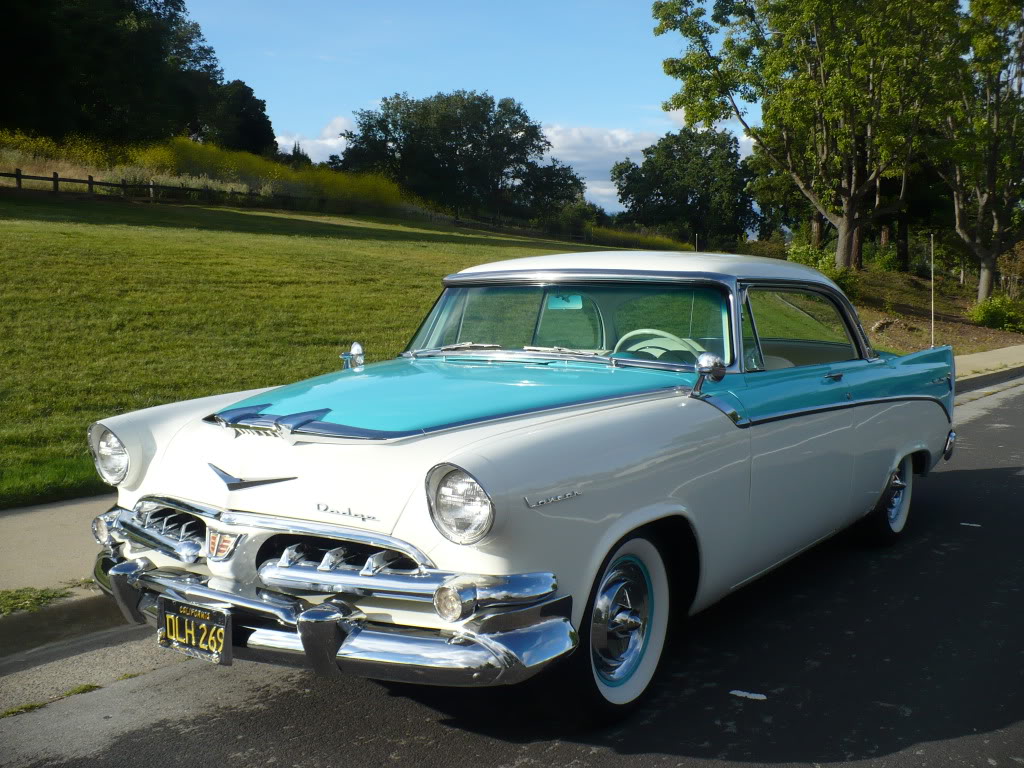
Automakers may have been guilty of stylistic excesses in the 1950s, but Dar still remembers fondly tri-tone paint jobs, 4-door hardtops and fins that soared into the sky.   He also loved the names of 50s vehicles, like the nomenclature affixed to the 1956 Dodge Coronet Custom Royal Lancer, shown here.


Cadillac, as well as Lincoln, recently joined other luxury automakers and name their new models using a combination of capital letters, not a “noun.”  Gone are Cadillac Coupe de Ville and Lincoln Town Car.  Say hello to ELR (new plug-in hybrid by Cadillac, shown) and MKZ (Lincoln’s replacement for the Zephyr.)
-->
 
Here’s a question for the readers of this column.   Given a choice, would you prefer that automakers name their vehicles with letters and numbers (referred to as an alpha-numeric name) or with nomenclature based on a usually common word? 

Do you like the sound of a car being named A8 or Coupe de Ville?  Does 328i ring your bell louder than Mustang Boss?  It appears that car buyers are opting for the alphanumeric lingo.  In the past ten or twenty years, it seems that almost all the automakers – especially those selling luxury vehicles – have abandoned using nouns or names and all have embraced using a blend of letters (mostly capitalized) and numbers (some making sense – like indicating size of engine or length of the car and some signifying nothing).

Credit has to be given to the three major German luxury brands for marketing their vehicles using alphanumeric names over a long period of time and becoming extremely successful.  While A4 Audis, C-class Mercedes-Benzes and 3 series BMWs are selling like hotcakes, I for one, really wish that automakers had stuck with using old fashion names for their vehicles.

I have a couple of reasons for feeling this way about vehicle names. 

This may only be a problem for me, but I have a devil of a time remembering car names that aren’t nouns.  When Cadillac started switching its car model names to all capitalized letters it was fairly easy for me to remember their offering’s new names. 

The Deville Touring Sedan became the DTS, the Seville Touring Sedan became the STS and the Catera became the CTS.  That made some sense to me.  I wasn’t happy that Deville became DTS but at least I could remember the name.

Then Cadillac introduced the SRX crossover and the XLR roadster.  It took me a long time to remember those two new names.   The X used in SRX was a good reference, because most of the new crossovers were probably all-wheel drive and X is often used by automakers to identify that feature.    But what the heck does SR stand for?

And then along came the Corvette-based XLR.  It didn’t have all-wheel drive but still had the X in the name.   I eventually remembered the new names, but they don’t come to me in an instant.

The new names must be working for Cadillac because the GM luxury marque isn’t giving up on using the three cap letters to name their new models.  At the recent Detroit auto show, Cadillac introduced a new model called the ELR.

Can you guess what those letters stand for?  In some ways, the name ELR makes some sense.  The ELR is Cadillac’s version of Chevy’s Volt plug-in hybrid model.  Unlike the 4-door Volt, the ELR is a two-door sporty coupe.  Can we assume that the E stands for electric and the L stands for luxury?  Now if only the ELR was a little convertible, I could than make the argument that the R stands for roadster.

As it now stands, I have no idea what the R stands for and I guess it doesn’t matter, as long as I can remember the new car’s name.

Again it may be my age, but I’m from an era when there were cars built and sold that had really wonderful names.   I recall going to the dealer in Lapeer and sitting in an Eldorado Biarritz convertible or seeing in the catalog the photos of the Cadillac Eldorado Seville and Eldorado Brougham.  Just saying those Cadillac names would make folks feel wealthy and important.

Over at the Dodge dealer you could put you money down for a Dodge Coronet Custom Royal Lancer (the Lancer indicated it was a hardtop.)  My tongue and brain feel better saying Coronet Custom Royal Lancer than saying 750i or Q50? 

I’m really pleased that domestic makers are still coming up with new names that don’t have cap letters and numbers in them.   Chevy moved from Cobalt to Cruze in naming its most recent compact car.  The Bow Tie brand still calls its family sized cars the Impala and Malibu.  They didn’t even think of changing the Corvette’s name when the seventh generation of the iconic sports car was introduced in January.

Dodge likes to use names from the past.   They have the Charger, Challenger and just brought back the Dart name.  That was a good move.  Chrysler uses numbers in calling its full-size sedan the 300 but that makes sense.   The highly regarded 300 letter series performance cars of 1955 to 1965 have defined the brand.

Ford and Chevy has introduced new models in the past with names that start with the letters F and C respectively.   For a period of time back in the sixties, all Chevys had to start with the letter C.  There was the Chevy Corvair, Chevy II, Chevelle and Camaro.

Ford followed suit with the Falcon and Fairlane.  They broke the “F” tradition in 1964 when choosing a name for their pony car.  Instead of Filly, they selected Mustang.  Chevy weaned itself of the C tradition with the Monte Carlo and later the Lumina, Malibu, Monza and other models.

Of late, Ford is back to naming new offerings using the letter “F.”   The Focus and Fusion being current examples.

Perhaps the automakers are drifting into alphanumeric names and away from using nouns because the good ones like Mustang and Impala are already taken.   Of course, if you are Toyota, you can always just come up with interesting sounding names like Camry and Yaris and find buyers galore.  I checked my dictionary and neither of those words are listed.

Are there still good names available for automakers to use?  I think so.  I don’t have time to leaf through the dictionary to find some examples but somewhere in my Funks and Wagnall there must be a winning name that we can all pronounce, spell and relate to. 

We can then look forward to the introduction of a new Chevy Arapahoe pickup and not a Chevy MPUX4 (that stands for massive pick up with four-wheel drive, in case you wonder). 

I’m going to post this article on my blog site (see address at end of column).  I’d like to hear your feedback on my auto names observations.


Friday, February 08, 2013

Dar's and Chuck's top ten beautiful and homely cars

 
I’m writing this column in the south, enjoying 70-degree temps and observing from afar the frigid and snowy weather that engulfed the Midwest just after I departed St. Joseph.

Joining me is my good friend Chuck Hassel, a fellow car nut who grew up in the Chicago area but now resides in South Carolina.  We’ve make our visit south each January to escape the colder northern climes (well, at least I do) and, more importantly, to discuss cars.   We love all kinds of cars, be they new or old.

Chuck has been ogling cars since he was a little kid.   His education includes degrees in engineering from Purdue and product design from Art Center College in California.

I showed Chuck a copy of my last week’s column about the Hemmings Classic Car editorial with Richard Lenitello’s eight ugliest cars and my reaction to his selections.   Naturally we began coming up with ugly candidates of our own.   We agreed up with our top ten list.

We also thought it would be fun to see if we could come up with a list of the ten most beautiful cars.   It was a challenge, but we did it. 

So, behold, our list of the ten homeliest (ugly seems too cruel a word) and ten most beautiful American cars ever offered.  After each vehicle selected we have added a brief remark on why it was selected:

TEN HOMELIEST VEHICLES:
            1937 - ‘39 Willys (bug-eyed headlights and a pointed snout)
1958 Buick (massive looking, a ponderous chrome-mobile)
1958 Ford (a failed attempt to duplicate the look of the new 4-place T-bird)
            1958 Oldsmobile (see 1958 Buick above)
            1958 Packard (stacked fins and tacked-on quad headlights, a sorry end to a great marque)
            1961 DeSoto (unrelated dual grille openings, clunky-looking taillight housing)
            1961 Plymouth (cabbage grater grille with Halloween headlights that scared small children)
            1980 Ford Thunderbird/Mercury Cougar (the stylist must have lost their French curve, a box was their inspiration)
            2000 – ’05 Chevrolet Monte Carlo (a crisp design that obviously sat too long in the hot sun)
            2001 – ’05 Pontiac Aztek (not sure if it’s a van or a car but not Pontiac’s best effort)
High on many automotive lists of homely cars is the overwrought 1958 Buick, shown here in the Limited series.


The rather scary front end styling of the 1961 Plymouth has been said to be so ugly it scared small children.  It certainly wasn't designer Virgil Exner's best efforts.


TEN BEAUTIFUL VEHICLES:
           
            1933 Pierce-Arrow Silver Arrow (one of the first American vehicles to feature breathtaking aerodynamic lines that set it apart)
1936 Cord 810/812 (Gordon Buehrig’s Cord was a styling masterpiece, radical for its time, still eye candy today)
1939 Lincoln Continental Mk 1 (One of Edsel Ford’s best efforts, providing a must-buy luxury car for the Palm Beach set)
1953 Studebaker (Studebaker stunned American car buyers with Raymond Loewy’s European inspired design)
1955 Chevrolet (featured a Ferrari grille, V-8 power and all-new body of classic simplicity)
1960 Dodge Matador/Chrysler New Yorker (perhaps Virgil Exner, Sr.’s highest achievement and his most successful fin effort)
            1961 Lincoln Continental (award winning then, still stunning to look at)
            1966 Buick Riviera (Words like elegant, graceful and sophisticated are used to describe this Dave Holl’s masterpiece)
            1970 ½ Chevrolet Camaro (in production for 11 years, the crisp, clean  Italianate pony car was a huge favorite) 
1971 Plymouth Satellite coupe (a muscular yet elegant car, it’s bold loop bumper was a perfect compliment to the athletic car)


 This photo, taken at the Concours d'Elegance of Southwest Michigan in St. Joseph, shows me standing in front of one of Studebaker's prettiest coupes ever.  The 1953 - 54 Commander coupe was designed with input from internationally known Raymond Loewy.  Most best looking car lists include this design beauty.

Above is the iconic and great looking 1961 Lincoln Continental 4-door convertible.   Considered by many to be the finest looking Lincoln ever introduced.   Wouldn't it be great if Lincoln could return to market a Town Car-like model that has the impact of this landmark luxury model.

If you don’t recall what some of our selections look like and a photo is not shown, use your computer’s search engine and type in the year and car.  Photos galore will appear to remind you just how ugly or beautiful these cars were.


Sunday, January 06, 2013

2012: A good year or not so good?


Ford Motor, like the other domestic automakers, have had a pretty good year with modest sales improvements.   Recalls, however, have become an issue, especially for Ford with the popular 2013 Escape.  Between July and September, the all-new crossover has been caught up in four recalls ranging from bulky carpets to engine fires.  Brisk sales of the popular vehicle appear to be unaffected, however, as Ford has quickly acknowledged the problems and issued quick fixes or provided loaner cars.

How would I describe, with few words, the domestic auto business in the past year?  How about:  Not so good.  Good.  Pretty good.    

The not so good news?  Sluggish Sales:  Vehicle sales have continued to show improvement over the course of the past year, but the SAAR (Seasonal Adjusted Annual Rate) figure expected at the end of December is still only about 15 million units sold.  While way better than the 11.4 million vehicles sold in 2009, it is still two million short of the glory days prior to the Great Recession when automakers routinely sold almost 17 million vehicles annually.

Broken cars:  Recalls have been a common occurrence in the auto industry since the government made them mandatory way back when.

The year 2012 had the fairly typical number of recalls.  In Dearborn, however, the folks at the top must be scratching their heads over the four-in-succession recalls posted by the National Highway Transportation Safety Association since the introduction of it Ford’s all-new 2013 Ford Escape crossover.  

From stuck carpets to engines catching on fire, it has been a rough year for Ford since the first recall on July 6 and the last on September 5, 2012.  Fortunately for Ford, sales of the enormously popular utility vehicle have not been affected too much.  This might be because the company responded to each recall forcefully by acknowledging the problem, finding a fix and going out of the way to accommodate buyers of the Escape by offering loaner cars. 

Auto brands struggling:  Another not so good situation for the auto business in 2012 was the inability of several marques in the U.S. to make much headway in becoming financially viable in the highly competitive auto business.  I’m talking about Buick/GMC, Lincoln, Mazda, Volvo, Jaguar and Mitsubishi.

GM dropped Pontiac, Saturn, Hummer and Saab in 2009 so they could focus on the remaining Cadillac, Buick, GMC and Chevrolet brands.  The decision seemed to make a lot of sense.  It’s far easier to create and promote four brands than eight. 

Cadillac is still struggling but making progress with a raft of new product. Buick, while sales have improved slightly, is still a little wobbly.  The division that once sold 800,000 vehicles struggled this past year to reach 200,000. 

Will the upcoming all-new Buick Encore mini-crossover help to improve sales?  That is the unanswered question.  If Buick does eventually falter, heaven forbid, then I see GMC joining Buick and meeting up with Olds, Pontiac and the others in car heaven.  

The post-bankruptcy GM built its dealer organization combined the Buick and GMC outlets, for the most part, as a single dealer group.   If Buick is gone, GMC sales aren’t large enough for the truck-only dealer groups to survive.   Being a twin of the Chevy trucks, it would be logical to drop the now 101-year-old GMC brand.

I’ve written about Lincoln’s plight in a recent column.   Once selling as many as 230,000 luxury cars and trucks a year (1990), now Ford Motor struggles to sell 100,000 of the luxury brand.   Let’s hope the fresh, new product in the pipeline succeeds in resuscitating this once proud marque.

Imports Jaguar, Mazda, Volvo and Mitsubishi are also struggling to build sales and are fighting to stay viable.  I sincerely hope they all succeed but they all need a boatload of new buyers in their dealer’s showrooms.  Don’t be surprised to see a merger or two involving these brands in 2013.

 The good news?    Improving car sales:  In all the gloom and doom, there is good news, lots of it.  Car sales are on the upswing.  

Quality improvements:  Vehicles are getting better (if we ignore the pesky recalls of late).  The quality numbers for domestics are nearly matching the better imports and for the most part, all cars sold today are vastly improved over the poor quality we suffered through in the 70s and 80s.

Cars are safer:  New safety features, happily, really do work.  I know, because each day that I drive my new Verano I’m reminded.   There are chimes to signal that something might be behind my car and I should stop.  There are blinking lights in my rear view mirror to warn me that a car is in my blind spot.  I’m even warned, with a noisy beeping sound while backing out of my driveway, that a car is approaching my driveway from either direction. 

It’s all these wonderful passive safety features that caused my car insurance to actually be LOWER than what it cost to insure my 11-year old Neon. 

Lots of options:  I think it’s good news also that so many new power plant options are now available to consumers.  Want performance, Camaro and Mustang have reasonably priced models that approach super car numbers.   Want economy, you have an amazing variety of powertrains available – from all-electric cars like the Nissan Leaf, Tesla and Fiskars to hybrid models like the segment leader Toyota Prius and many others.

Then there is the plug-in Chevy Volt hybrid that eliminates “range anxiety” by offering all electric power for over 35 miles, with a back-up gas engine available to charge the batteries in the sedan if needed.

So it has been a pretty good year.  Depending on what happens in Washington regarding a resolution to the so-called “fiscal cliff,” auto sales are expected to continue to improve in the New Year.   If taxes do rise dramatically, this will undoubtedly affect car sales but no one can predict what the impact will be. 

The folks in the auto industry have probably been holding their breath this past week, hoping that the representatives and senators in Washington do what they were elected to do and take care of the people’s business. 

This car guy would like to see the playing field be level next year for the automakers, providing them a whole year of no drama (no higher taxes, no earthquakes, no floods, no tsunamis, etc.)   Then just maybe we’ll see U.S. auto sales again attain the 17 million-level and jobs will be created and more safe cars will be bought and enjoyed on our highways.

Permit me to use this year-end column to wish all readers a Prosperous and Happy New Year.


Good auto news in 2012 was the wide variety of power trains available in showrooms.  In addition to the traditional gas-powered, internal combustion engines, car buyers also had options to purchase all-electric, hybrid and plug-in hybrids.  Some, like the Chevy Volt, eliminated electric car “range anxiety” by having a gas engine on board to re-charge the batteries on the go.


Calling all Caddies (Dar on hunt for 'Stanard of the World'

 
Cadillac, on its 110th anniversary, has been selected as the featured marque of the 9th annual Concours d'Elegance of Southwest Michigan.  The Concours selection committee has created a list of desired vintage Cadillacs for the show.  Not surprisingly, the limited edition 1957 Cadillac Eldorado Brougham - a $13,000 car when you could buy a Chevy for $2,000 - is on the list of desirable models once sold by the GM brand.


In a little more than a month, I will oversee the mailing of over 1,200 Concours invitation letters to vintage vehicle owners with addresses throughout the Midwest.  The letter, from me representing the selection committee of the Concours d’Elegance of Southwest Michigan, will invite owners to submit a vehicle or vehicles to show in the 2013 August car show fundraiser.

In years past an average of 80 vehicles have been selected.   This year the decision has been made to increase the total by a dozen or so vehicles.  The show will remain in St. Joseph’s Lake Bluff Park.

Like past years, a featured marque has been selected.   To celebrate its 110th anniversary, the General Motors luxury brand Cadillac will be celebrated in 2013.  We will be seeking a large number of significant Cadillac models to invite to St. Joseph and participate in the noon lead-off Pass in Review event.

Cadillac has produced many fabulous automobiles over its long history.   Naturally, we have some favorites we’d like to see in the show.   On the list includes the first Cadillac, the 1903 model.  Concours narrator Ed Lucas is hopeful further locate a 1903 Ford Model A as a companion model, as they are nearly identical.

Cadillac was first with a self starter with its 1913 model – we’d like to have that car, as well as the 1915 Type 51 model that was propelled by Cadillac’s first V-8 engine.   Just about any Cadillac from the 20s or 30s will be welcome.  Whether it is a formal limousine, dual cowl phaeton, convertible Berline or sport phaeton – we won’t be fussy. 

Cadillac sold Series 452 V-16s from 1930 to 1937 and any one of them would be a great addition.  I’m a huge fan of the 1938 Sixty Special, one of renowned designer Bill Mitchell’s first effort at GM.   Cadillacs from the 1940s on the list include the 1941 model and the all-new, post-war 1948 – 49 offerings, especially the fastback coupe.

My favorite Cadillacs are from the fifties.  We’ll hope to have at the show the rare 1953 Eldorado convertible, either a 1957 or 58 Eldorado Brougham, maybe a 1957 Eldorado Biarritz or Seville or the iconic finned 1959 convertible.

Favorites from the 60s include any 1961 – 62 models, any 1965 – 66 models and the 1967 front drive Eldorado luxury coupe.  Great 1970s offerings include the 1971 Cadillac or the first smaller Cadillac, the 1975 Seville. 

Cadillac with an interesting history will also be invited.  Powerful and famous people were drawn to the “Standard of the World” mystique and bought the luxurious car.  A great looking Cadillac once owned by a celebrity will be a welcome addition.

The Concours leads off the 1:30 and 3:00 Pass in Review events with cars representing a special featured class.  This year we are seeking both horseless carriage “high wheeler” vehicles from the early days of the late 19th and early 20th centuries for the 1:30 event and “Lady Owned Cars” at the 3:00 presentation. 

High wheelers on our list include a Holsman, Economy, International and others of that era.   Readers who have attended the Concours show may recall the wonderful 1909 Economy Touring high wheeler belonging to Brady Mann of Illinois.   If you own a high wheeler, or know of someone who does, please get in touch with me.  We hope to have a half-dozen of these interesting vehicles.

As I attend more and more car shows, I’m noticing the increasing numbers of ladies who own and show vintage cars.   We will make an effort to find at least six female owners who can show their vehicle. 

An invite has already been extended to Margaret Dunning of Plymouth, Mich.  She is the 102-year old Internet sensation who shows a 1930 Packard 740 Roadster, which she has owned since new.   She has already accepted invitations and shown her beautiful Classic Packard at Pebble Beach in California and at the St. Johns’ Concours (formerly Meadowbrook) show in Plymouth.

 Naturally, we hope she will be free and can accept our invitation.  A suite at The Boulevard Inn has already been reserved for her.

If readers own any of the cars discussed in this week’s column or know of someone who does, please get in touch with me soon.   I will add your or their name and address to the master mailing list, and send an invitation in late January.  If you would like more information about the Concours, don’t hesitate to contact me.

A reminder to past show participants.  If you have had a vehicle in the Concours, it is eligible to be shown again if two years have passed.   If you showed your vehicle in 2010 or earlier, please consider applying again.

The 9th Annual Concours d’Elegance of Southwest Michigan fundraiser will be held on Saturday, August 10, 2013.  Be sure to visit our Facebook address at www.facebook.com/ConcoursSWMI.  We’d love to have you “like” us and stay in touch.


The Concours' selection committee is seeking "high wheelers" automobiles to fill a special class for the 9th annual car show on August 10, 2013.  High wheelers, also called "horseless carriages," were built at the beginning of the auto era in the late 19th and early 20th centuries.   This 1909 Economy G Surrey, owned by Brady Mann of Illinois, is an excellent example of a high wheeler and was on display at last summer's Concours d'Elegance in St. Joseph.


Saturday, December 15, 2012

I visited the AACA Fall Meet in Hershey and spotted these great automobiles.

This pretty Mercedes had a wood IP!

A classy Mercedes

This 1958 Dodge Sierra wagon was for sale and the price was right.

If I'm not mistaken, this is the first time a two-tone paint stripe was ringed by chrome trim.  I've read that Virgil Exner, Sr. was responsible for this colorful option.

An Exner-designed 1961 Chrysler New Yorker convertible. 

I've always loved gold nomenclature on a white painted automobile.  A 1962 Chrysler

Pretty pre-War Cadillac with two-tone paint.

I've always loved pastel pink and white paint jobs, especially on the 1958 Edsel Citation.

Only Cadillac could get away with offering fins like this and find so many buyers.

Most people like the fastback version of the 1967 - 69 Barracuda.  But I like the coupe look too.   The concave rear window was very unusual for a low priced car.

Gorgeous custom interior on 1966 Corvair 4-door Monza


Prettiest fins on the market.  1959 Buick LeSabre

Unusual trim piece on the 1962 Dodge Polara 500

Virgil Exner seemed to love placing headlights in unusual places.

Wish today's cars could be optioned with these colors.

(Re) Introducing the Lincoln Motor Company


-->

On everyone's list of great Lincolns is the first Continental, the 1939 Mark I.   Edsel Ford wanted a special car to drive to Florida to show off friends on his annual winter break.   Working with designer Eugene T. "Bob" Gregorie, the two of them starting with an already great looking Lincoln Zephyr and created the formal and grand Lincoln Continental Mark I.  So popular with his wealthy friends in Florida, Lincoln immediately put the car into production.


It is no secret to those who follow the auto industry to notice that Ford Motor Company’s Lincoln brand is in deep trouble.  One only needs to read monthly sales figures to see that during the current auto industry sales recovery in the United States, the once powerhouse luxury brand from Ford is having a rough time keeping up.

Sales of Lincoln vehicles are down 15 percent for 2012.  Only about 70,000 units have been sold.    That paltry figure compares to the high water sales mark of 230,000 enjoyed by Lincoln back in 1990.

While Lincoln falters, its luxury brand competitors, especially foreign-based Mercedes-Benz, BMW, Audi and Lexus are selling in near record or record numbers.   Long time domestic competitor Cadillac is also struggling but the recent introduction of two all-new models this past summer is pushing the once “Standard of the World” sales upward and a recovery seems to be underway for the once mighty GM brand.

So what happened to Lincoln, and is Ford doing anything about it?  As with the story of any entity that takes a mighty fall, there is no one answer to the question.   Lincoln, founded in 1917 by Henry Leland has had a history of ups and down, not unlike nearly all the automakers.

When Henry Ford bought Lincoln from Leland in 1922 it fit nicely into the Ford family.   The Model T attracted folks in need of inexpensive transportation and the luxurious Lincoln appealed to the moneyed crowd.

Henry’s son, Edsel, 24 years old at the time of the Lincoln purchase, was given the responsibility to make something of Lincoln.  The appointment was a good decision by the old man because his son is recognized today for having a good eye for fine design.

I could write pages and pages of the many fine Lincolns that were crafted by Ford Motor and brought to market.  Edsel showed his genius as a man with a keen eye and a man of good taste when he oversaw the creation of two popular pre-war models that are highly coveted by collectors today. 

Working with designer Eugene T. “Bob” Gregorie, Edsel introduced the streamlined and affordable Zephyr in 1936 and the elegant and striking Lincoln-Continental in 1939. 

Lincoln managed to thrive even following Edsel’s untimely death in 1943 at the age of 49.  Notable Lincolns were introduced in the post-war era.  Popular with collectors were the first all-new models since WWII introduced in 1949 in two-sizes – one based on the mid-sized Mercury.

It wasn’t until 1956 that Lincoln made a concerted effort to compete more directly with Cadillac, its long time nemesis.   In 1956 Lincoln brought to market a luxury car that was an equal match to Cadillac – in size and in style.   Sales still were only a third of Cadillac’s but Ford Motor made it known Lincoln was now a serious contender.

It took until the 1970s before Lincoln started to really thrive and challenge Cadillac in sales supremacy.   But it was the 1961 model year when Lincoln offered a new car that set the tone for how the marque would look and be marketed for a decade to come.

The 1961 Lincoln-Continental was a landmark vehicle for Ford.  Not a big seller at first but the beautifully designed and executed down-sized sedan and convertible, both with “look-at-me” suicide-style rear doors, were a slam dunk design home run and caught the public’s fancy.

The Lincoln-Continental looks hardly changed for 5 years and subsequent new models favored the severe but elegant look of the original and sales started to climb. The introduction of the Thunderbird-based Continental Mk. III in 1968 enriched the luxury brand’s lineup and pushed Lincoln to sales of 230,000 by 1990.

Then, with stiff new competition from Asian brands in the luxury market (Acura, Lexus, Infiniti) and the continual sales success of the Euro big three – Mercedes, BMW and Audi – Lincoln lost their way.

Perhaps Edsel Ford II, Edsel’s grandson, said it best on a recent television program about Lincoln’s plight when he said, “We took our foot off the accelerator.”  Sad to say, in the last two decades Lincoln has faded away.

So what to do?  If you’ve been reading the paper or watching television, you know that a plan to revitalize Lincoln is underway – big time.  The company announced just last week in a full-page ad in USA Today a name change and a game plan.  Gone is the old Lincoln/Mercury Division.  Now it is The Lincoln Motor Company, just like in the beginning. 

A new team is running Lincoln.  Ford Marketing Chief Jim Farley is now Lincoln’s top executive.  It has been announced that over the next four years four entirely new Lincoln’s will be introduced. 

In 2014 the brand will enter the Chinese market for the first time.  Says Matt VanDyke, Lincoln’s global head of marketing, sales and service, “Ford has been completely re-invented and now it’s time to do that with Lincoln.”

Lincoln now has its own styling studio and heading it is former Cadillac chief designer Max Wolff.  Max’s first effort for Lincoln is the MKZ reaching dealers this month.  Like before, this entry-level Lincoln is based on the Ford Fusion.  But unlike the last MKZ, you’d never know it.  It shares the Fusion platform but all exterior sheet metal and all interior surfaces is uniquely Lincoln’s. 

In addition to the full-page print ads in national publications, Lincoln has introduced a brand new website and produced three new television ads.   Ford has purchased a 1-minute Super Bowl ad to re-introduce Lincoln as a viable and exciting new luxury choice – hoping to reach all the buyers out there who haven’t given a moment’s thought of considering Lincoln for purchase.

So will new executives, new designers, new name, new product and new emphasis on service by dealers (a concierge-type service provided by Lincoln dealers has also been announced) help pull Lincoln out of the sales doldrums? 

It’s not an easy task.  Just ask Cadillac.  GM has spent billions of dollars in the past 10 – 15 years trying to return Cadillac as a worthy contender in the cutthroat luxury car business and the jury is still out.

Certainly those of us who are still mourning the loss of Oldsmobile, Plymouth, Pontiac and Mercury are pulling for Lincoln.  It will be nice to see the 95 year old marque rise Phoenix-like and be a major contender in the market in the years to come.   Fingers are crossed.


Few luxury brands can match the beauty and elegance of the then all-new 1961 Lincoln-Continental.  Reduced in size and designed using simple shapes and forms, the car helped establish Lincoln as an important new player in the luxury car class.   As new Lincoln design chief Max Wolff and his styling crew work to create a new exciting generation of Lincolns, finding inspiration from the '61 Lincoln-Continental might be advisable.


Lincoln got serious in its battle for sales leadership with Cadillac by introducing the beautiful, all-new 1956 model.  The car's dramatic-looking front end was derived from the 1955 Futura dream car (which later was transformed by customizer George Barris into the infamous Batmobile).  Sales rose dramatically and the 1956 Lincoln remains a favorite of Lincoln collectors.  This car, formerly owned by Al Dickerson of South Haven, was exhibited at an early Concours d'Elegance car show in St. Joseph in Lake Bluff Park.

 Following are photos of a variety of beautiful Lincolns that graced our highways in the past.  Enjoy.

 1961 Lincoln Continental 4-door convertible
Rear quarter view of 1961 Lincoln Continental


1956 Lincoln

1965 Lincoln Continental 4-door sedan

1957 Lincoln


Sunday, November 25, 2012

Capturing the art of the auto


-->
The tail fin defined the Cadillac during the fifties and none shouted Cadillac like the P-38 Lightning aircraft-inspired tailfins found on the 1948 – 1956 models.  A close-up shot of this 1955 Cadillac Eldorado iconic fin best personifies the luxury brand’s tail fin legacy.


I’ve been eyeballing automobiles since 1954.  Regardless of where I am – in a parking lot, on the freeway or on Niles Avenue – my eyes screen each car that passes by.   I can’t help it.

In the 58 years since my automotive awakening I’ve acquired a fondness for a number of the older cars once spotted on the highways.  Of late I have made an effort, when attending car shows, to capture images of these favorites with my camera at car shows.

With some cars, I like only a portion of the overall design, like the grille or the rear taillight.  So over the past many years, I’ve been drawn to photograph only a section of the vehicle in an artistic fashion.   Some have actually come out pretty nicely and can almost be consider works of art – at least to my eyes. 

I was pleasantly surprised recently when someone visited the Concours d’Elegance of Southwest Michigan’s Facebook page and wrote a complimentary remark about a photo I had posted of a 1955 Cadillac Eldorado rear quarter fender view.  I had used this particular photo when I announced the recent decision by the Concours National Advisory and Executive Boards that the Cadillac would be the featured marque in 2013 to commemorate the luxury automaker’s 110th anniversary.

The Facebook visitor’s comment, “This picture in undeniably beautiful” made my day and got me to thinking about some of the other photos of cars that I’ve taken over the past 10 – 15 years. 

So I opened my iPhoto album – now filled with 5,452 images – and looked for my favorite pictorial “car parts,” so-to-speak.   I found a number that really ring my bell.

The aforementioned 1955 Cadillac photo is at the top of the list.   If you want a photograph of GM’s luxury division that say loud and clear “I’m a Cadillac,” then I feel this photo accomplishes the task.   I only shot the tail of the car and from slightly above.  The famous P-38 Lightning aircraft-inspired tail fins were used on the Cadillac from the 1948 original until through 1957 model.

This picture resonates even though the trunk on the vehicle in the photograph isn’t completely closed.  The strong sculptural statement of the finned taillight simply carries the day.

Another photo that garners comments when I share it is one I took many years ago while visiting Carlisle, (Pa.) Chrysler Nationals.  I’m a huge fan of Virgil Exner, Sr.’s 1955 cars that featured the “Forward Look.”  But what makes my photo of this particular Dodge notable isn’t the car’s handsome grille, but rather the dramatic effect caused by reflection in the chrome trim from the overhead stripped canvas tent.  It reminds viewers of peppermint candy and makes the photo memorable.

I often discover that shiny car surfaces make great mirrors for self-portrait.   In 2009 at Hershey, Pa., I came across a really nice black 1954 Buick Special. 

In 1954 GM introduced all-new Olds, Cadillac and Buick models.  I liked the cars a lot because they all featured the first mass-produced wraparound windshields.  Of the three GM luxury cars, I have always favored the Buick and its rear subtle fin.  When I spotted the black 1954 Special at Hershey, I had to take a photo of that fin.  The self-portrait was just a bonus.

I’m not savvy enough to use PhotoShop.   I take a photo and if it turns out great, it’s pure luck.   I attended the since-discontinued Venetian Festival car show some years back and took a photo of a nice two-tone 1955 Chevy Bel Air.  

This image isn’t quite a work of art but it captures perfectly the essence of the new, clean styling of the popular Chevy.  Most folks seem to like the 1957 Tri-Five Chevy better than the initial ‘ 55, but I’ve always been won over by the clean, pure lines of the original.  

Few cars are introduced that are perfect in every way.  With the ’55 Chevy I wouldn’t change a thing.  The 1955 Chevy is one of those perfect cars, in my opinion, and this photo shows why.  This cleanly designed, unadorned beauty represents the very best from GM’s top designer Harley Earl.

I admire all classic Packards and can understand why the luxury brand remains a favorite of serious collectors.  At Hershey this past fall I spotted a beautiful roadster from afar.   I wasn’t drawn to it because it was a Packard, but because of its beautiful color.  It shouted, “Look at me!” 

On closer inspection, I became enamored by the beautiful wheels on the 1929 automobile.   Disc-like, they were painted the same color as the car’s body.   Most importantly, in the wheel’s center, was the traditional Packard red hexagon.  This photo captures flawlessly the combination of colors and shapes that work beautifully together and pleases the eye.

Great art?  No, but it reveals perfectly the elegance of the era.

If you would like to see my photos that I’ve mentioned in today’s column in high definition, please visit my blog site at http://darscars.blogspot.com/.  I will post all the photos that I’ve mentioned.  I also welcome your comments on my blog. 

By the way, if readers use Facebook and have not yet visited the Concours d’Elegance of Southwest Michigan Facebook page (www.facebook.com/ConcoursSWMI), please do so.   And while on your visit, please “like” us.   It will keep you connected with the many activities of the fundraising event.


 Take a shiny, curved chromed surface and add color stripes from an overhead tent and you have a dramatic photograph.  This 1955 Dodge Royal Lancer was snapped by Dar at a Carlisle, Penn. Chrysler National show a few years back.


Whether up close or from afar, an automobile painted a gorgeous color will capture attention.   And none did it better than this 1929 Packard at Hershey.  Dar snapped the automobile’s wheel, capturing both the elegance of the wheel design and the stunning turquoise and red color combination.


 A 1954 black Buick Special rear fender makes for a perfect mirror to caption a self-portrait.  This photo may not be great art, but it speaks to the writer because the ’54 Buick is a favorite of his.


Both Dar’s grandfather and brother owned a 1955 Chevy.  The all-new car was one of Chevrolet’s most significant models, as it introduced not only its famous small block V-8 but also fresh, clean new styling, as shown in this rear quarter view that still looks fabulous 57 years later.